

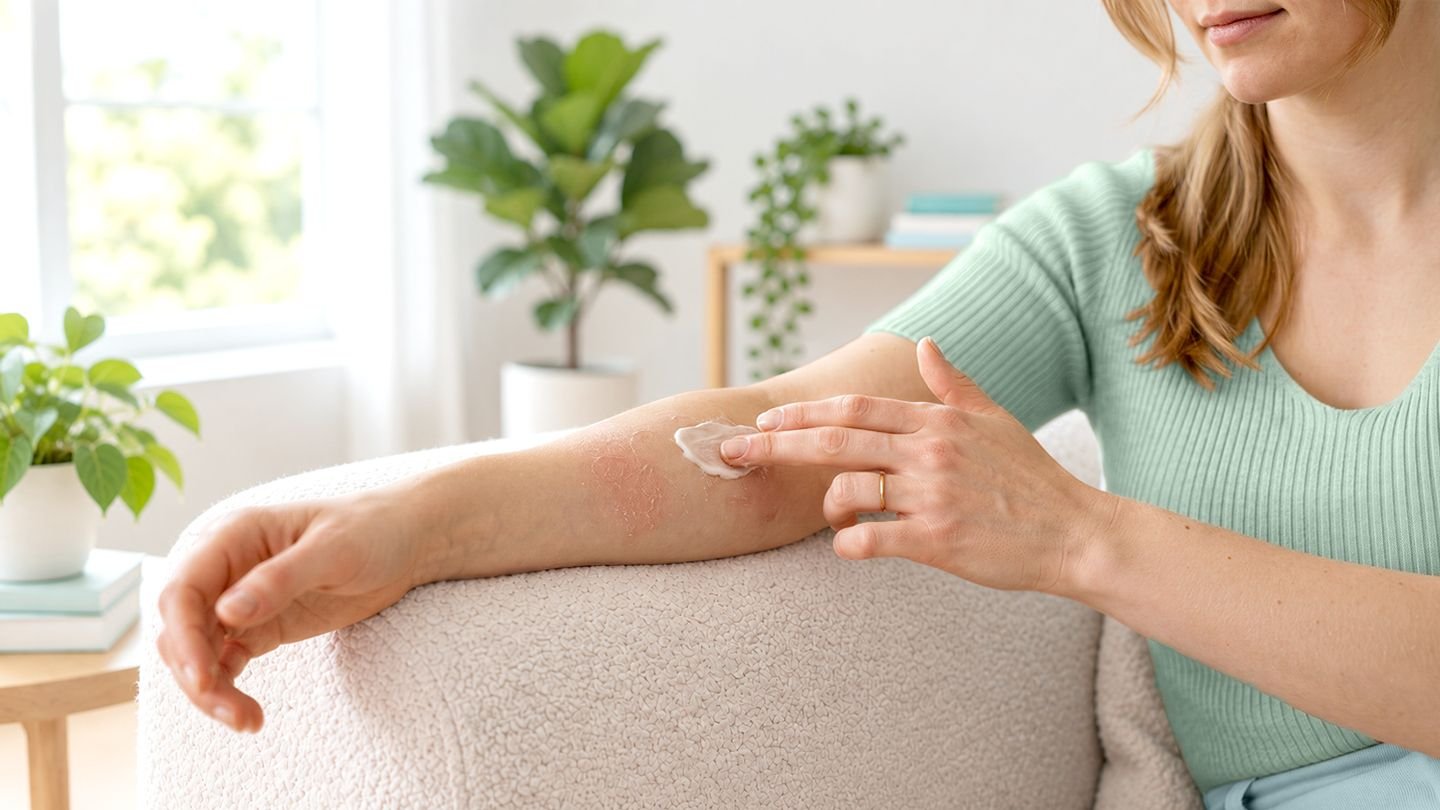
How atopic dermatitis (AD), the most common form of eczema, manifests in your teens and twenties may not be how it looks or behaves in your sixties.
[1]
Whether it persists from childhood, returns in adulthood after years of remission, or is newly diagnosed decades later, its symptoms and how it’s managed can change with age.
[2]
At the same time, aging brings other changes to the skin, too. It tends to become thinner, drier, and more fragile, with reduced oil production and a less-efficient skin barrier. What’s more, factors like medications and other chronic health conditions can add new challenges to AD management.
[1]
[3]
Even if you’ve lived with AD for decades, your treatment and skin-care routine may need to evolve over time. Here are five ways to manage AD as you get older — and how to recognize when it may be time to adjust your approach.
1. Expect Your Eczema to Change Over Time
Eczema doesn’t follow one predictable path, even when you’re older, says Chris Adigun, MD, a dermatologist in private practice in Chapel Hill, North Carolina.
“You don’t really grow out of it. You just grow into a new kind of version of it,” she says. “People can have terrible eczema in their childhood, and they come in [years later] for persistent hand dermatitis, and they have no idea what it is. It’s just that it’s shifted to their hands,” Dr. Adigun says.
Some types of eczema are more common in older people, according to Julie Van Onselen, a dermatology nurse adviser for the nonprofit organization Eczema UK in Oxford, England. They include:
[1]
- AD that may appear more on the hands, arms, and legs
[4]
- Contact dermatitis, which occurs when irritation from soaps, creams, fragrances or chemicals increases, as aging skin becomes more sensitive
[1]
- Asteatotic dermatitis, also known as the “winter itch,” which more frequently affects the legs and causes itchy, dry, or cracked skin. It can look like “crazy paving” or a “dried riverbed” on the skin.
[5]
- Stasis dermatitis, which affects the lower legs in people with poor blood circulation as fluid leaks from veins and places pressure on the skin internally
[6]
- Seborrheic dermatitis, which can cause flaky, greasy patches on the face, scalp, or chest
[7]
2. Protect Your Skin Barrier — but Choose Products You’ll Actually Use
A daily skin-care routine is always a key priority when managing AD, says Renata Block, PA-C, a physician assistant and an assistant professor at Rush University in Chicago, where she specializes in dermatology and inflammatory skin conditions.
She says your daily bath or shower should be no more than 10 minutes long, using lukewarm water and a fragrance- and dye-free gentle cleanser. Follow this up with a ceramide-rich cream moisturizer while your skin is still moist, she says.
[8]
[1]
Moisturizing is crucial, Block says. “As we age, [internal] factors like hormones or a loss of collagen and [external] factors like UV radiation and pollution can take a toll on the skin by compromising the skin barrier, leading to thinning of the skin and loss of moisture,” she says.
[9]
But don’t assume aging automatically means switching to the thickest ointment available to combat dry skin, Van Onselen says. “A lot of people think if they have older skin, you need thicker, greasier emollients, but then you’ve got the problem of trying to wash your clothes.”
Ask your dermatologist about which creams, gels, and emollients are good options to try until you find one you can use consistently, she says.
3. Revisit Your Trigger List
The triggers that bothered your skin years ago may not be the only ones that matter now. Contact allergies can develop over time, Van Onselen says.
“The main thing is that as people get older, their skin barrier becomes a lot less efficient, and water will be lost through the skin, which means that there’s more entry for allergens in the skin,” Van Onselen says.
It’s worth paying attention to allergens you’re especially sensitive to now, she says. These can include:
- Cosmetics and scented products
[10]
- Household cleaners, detergents, and dishwashing soaps
[1]
- Certain fabrics, such as wool, and synthetic materials like polyester and nylon
[11]
- Certain antibiotics, such as bacitracin (Baciguent) and neomycin
[1]
- Dust mites or animal dander
[1]
Topical medications, dressings, and bandages used for other health conditions can also introduce new skin exposures, Van Onselen says.
Block recommends keeping a journal to track symptoms and potential patterns. You can also undergo allergy testing to determine if environmental allergens are exacerbating your symptoms.
[1]
4. Get a Rash Checked Again if Something Seems Different
When you’ve had eczema for decades it can be tempting to assume every itchy, red patch is more of the same. But a rash that looks different or stops responding to a treatment that normally works deserves another look, Van Onselen says.
“If somebody’s eczema changes in nature and starts appearing in another part of the body or becomes much more resistant to treatment, they should go and get reassessed,” Van Onselen says.
Van Onselen points to the development of nummular eczema, also known as discoid eczema, which is typically seen in adults and presents as itchy, coin-shaped lesions.
[12]
Err on the side of caution and get any new symptoms checked out, Block says. “If you are adhering to treatment and it is not making a difference, it can be something else, such as cutaneous T-cell lymphoma, which can mimic AD,” she says, noting that this form of skin cancer can “hide” under affected areas.
[13]
“It’s important that you do an annual skin cancer screening,” Block says.
5. Let Your Treatment Plan Evolve With You
Older skin may be thinner or more fragile, but that doesn’t automatically mean effective AD treatments have to be taken off the table.
Topical corticosteroids, for example, can still be used in older adults, Adigun says.
[14]
Nonsteroidal topical options can also be prescribed for sensitive areas of the body, such as the face.
[1]
As you get older, your dermatologist may need to consider more than your eczema when choosing a treatment. Take inventory of other medications you’re taking to manage chronic conditions, Block says. “It’s also good to be transparent about your health, social habits, and medications, including vitamins and supplements, so that the best treatment can be recommended,” she says.
That can be especially important if you need a systemic treatment for moderate-to-severe AD. Conventional systemic immunosuppressants, such as methotrexate and cyclosporine, may be prescribed with more caution in older adults because of the risk of drug interactions for people with conditions such as high blood pressure, cardiovascular disease, diabetes, osteoporosis, or reduced kidney or liver function.
[2]
Physical or practical limitations, such as arthritis, stiffness, or vision problems, make it harder to take care of your skin, Van Onselen says.
[15]
[1]
Work with your doctor to troubleshoot these issues with daily reminders you set up or get from caregivers, or by creating simplified routines.
[1]
