

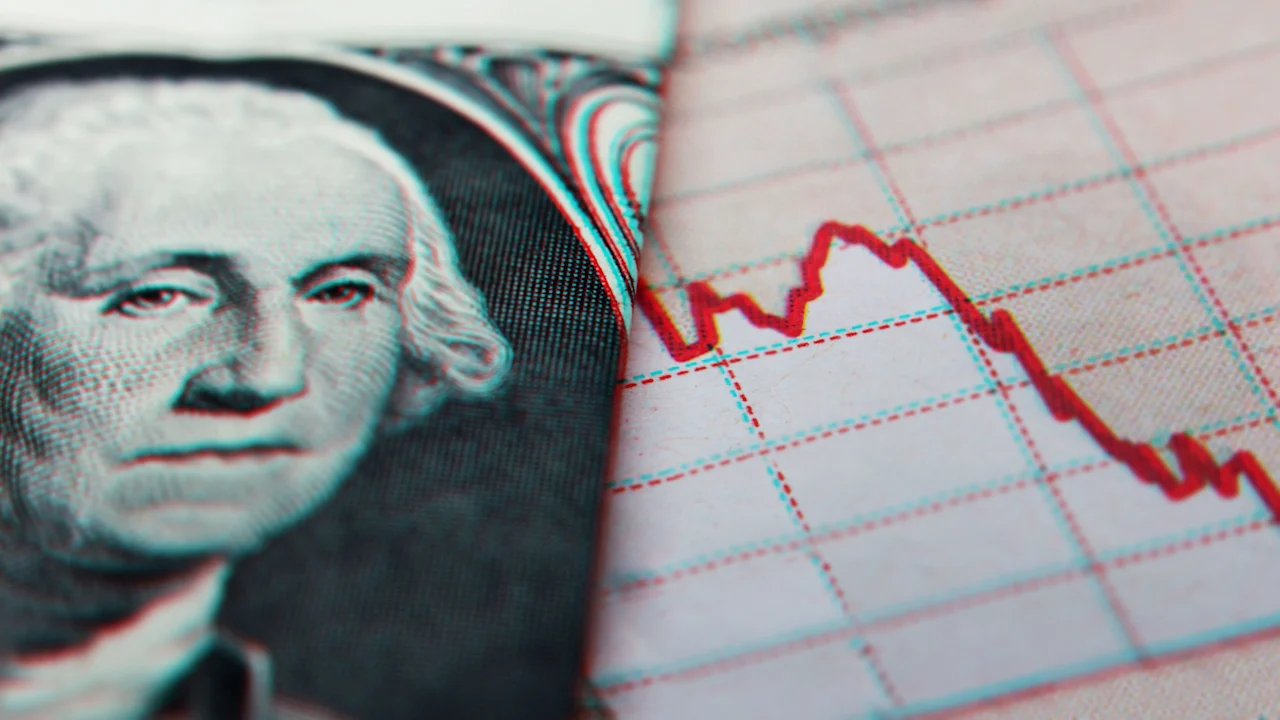
How are you feeling about the stock market these days? Depending on who you talk to, the American economy is either poised to soar into the stratosphere or fall off a cliff. As the current administration has been delighted to point out, the Dow Jones Industrial Average recently closed above 50,000 for the very first time.
However, that does not reassure the 72% of American consumers who, according to Pew Research, feel pessimistic about the economy–citing concerns about the cost of healthcare, food and consumer goods, and housing. If the pessimists are correct, those high consumer costs will negatively affect the stock market sooner or later.
Even with the current good news about the market, there’s a reason why it feels like we’re all waiting for the other shoe to drop. We are all facing a great deal of uncertainty as investors and consumers, between recent (albeit temporary) market volatility in response to political and economic news and the way AI is disrupting the market and the economy.
It’s enough to make you want to cash out all your investments and bury the moolah in your backyard. But just because it feels like we’re ripe for a market crash doesn’t mean there’s one on the horizon. And if there is a correction coming, there is plenty you can do to prepare for it.
Here’s what you need to know about positioning yourself and your money for a potential market crash so you’re not left picking up the pieces.
Know what you have
Answer honestly: do you know where all your 401(k)s are?
If you’re not sure, you’re not alone. Unclaimed retirement accounts are a serious problem that the Department of Labor is working to rectify. As of 2025, there were approximately 31.9 million retirement accounts, totaling about $2.1 trillion, left behind or “forgotten” by employees leaving the sponsoring workplace.
The stress of watching the economic roller coaster while feeling completely powerless is bad enough. Adding the sense that you don’t even know what you have, where it is, or if there’s anything you can do to protect yourself is just gilding the anxiety lily. That’s why the first step in preparing for a potential market correction is to make sure you know where (and what) all your investments are.
Start by identifying all of your accounts and reclaiming any that you have lost track of. In addition to the DOL, you can also check the National Registry of Unclaimed Retirement Benefits for any missing accounts. But you can also contact the human resources department of previous employers for help.
Even if you don’t have any misplaced retirement benefits, now is also a good time to review all of your accounts and investments. Do you know what you are invested in? Do you know why?
Knowing what you currently have can help you make informed decisions going forward, whether you assume a future of economic sunshine or storm clouds.
Figure out how to stay the course
Market crashes are terrifying–but unless you cash out your investments, they can be temporary. When you see your portfolio lose a huge percentage of its value, it’s human nature to want to stop the bleeding. But you need to stay the course until the market bounces back, because selling your investments right after a crash means locking in the loss.
This is much easier said than done, of course. Even the most risk-loving, ice-in-their-veins investors will feel their stomachs drop when their portfolios suddenly have a lot fewer zeroes than they did the day before. That’s why it’s a good idea to figure out ahead of time what will keep you from panic-selling if there is a sudden market downturn.
Some strategies for staying the course include:
- Invest in quality companies/stocks/indexes that are likely to survive a recession. Now is a good time to make certain you understand your investments.
- Make sure you have enough liquidity. If you treat any of your investments as a potential emergency fund, set up another fund or source. If you’re unable to transfer any of your investments into a more liquid asset, consider opening a HELOC as an alternative.
- Look for opportunities to invest. Market downturns can be a good time to purchase under-priced assets. (Just don’t be one of those jerks who crows about getting stocks “on sale” all over social media. Read the room, dude.)
- Go on a news diet. You don’t need to know every dip and drop in the market. You’ll feel better when you put your phone down and you’ll save money on all the antacids you don’t have to buy.
Rebalance your portfolio
Part of a well-balanced money diet is making sure you don’t have too many eggs in one basket. You probably already diversify your portfolio by splitting your investments into long-term, higher-risk/higher-reward investments, medium-term, lower-risk investments, and short-term, low-risk investments.
While most investors think about how they want to diversify their portfolio when they start investing, it can be easy to forget to rebalance that bad boy when the ratios get out of whack.
That’s why regularly rebalancing your portfolio should be part of your semi-annual or quarterly money management plan. This financial task is when you check on where your investments are compared to your investment strategy and goals. Then you buy or sell investments to bring your portfolio back into balance.
For example, anyone currently invested in the Dow is probably over-invested compared to their investment strategy or goals. Selling off some of that investment and investing the money elsewhere will not only allow you to capture the growth that the Dow is currently enjoying, but it will also help protect you from potential future volatility in the Dow index.
Getting into the habit of rebalancing your portfolio will help ensure that you keep market growth when it occurs, which can help you keep your cool and stay invested through downturns–because you know you kept the gains and can wait out the losses.
Make like a hitchhiker and DON’T PANIC
No politician, economist, or MBA has a crystal ball, so there’s no telling what the stock market will do in the future. But if your spidey senses have been tingling about the possibility of a market downturn, there are some practical steps you can take to protect yourself and your portfolio if we’re headed for a fall.
Start by making sure you know what you have. If you’ve lost track of any of your retirement or investment accounts, take the time to hunt them down so you feel in control of your funds. Now is also the time to double check that you know what you’re invested in and why.
From there, figure out what you’ll need to stay the course in case there is a crash–since a loss in value is temporary until you cash out. Some good strategies for staying the course include ensuring that you’re invested in quality assets that you understand, providing yourself with enough liquidity to handle an emergency during a downturn, planning on purchasing underpriced assets, and putting yourself on a news diet.
Finally, regularly rebalancing your portfolio is good investment hygiene, but it will also help you feel more confident when staring down a potential market correction, since you’ll know you’ve captured the growth of the market when it went gangbusters.
Market crashes aren’t inevitable, even if stomach-churning fluctuations probably are. But panicking is always optional and you can opt out.
