

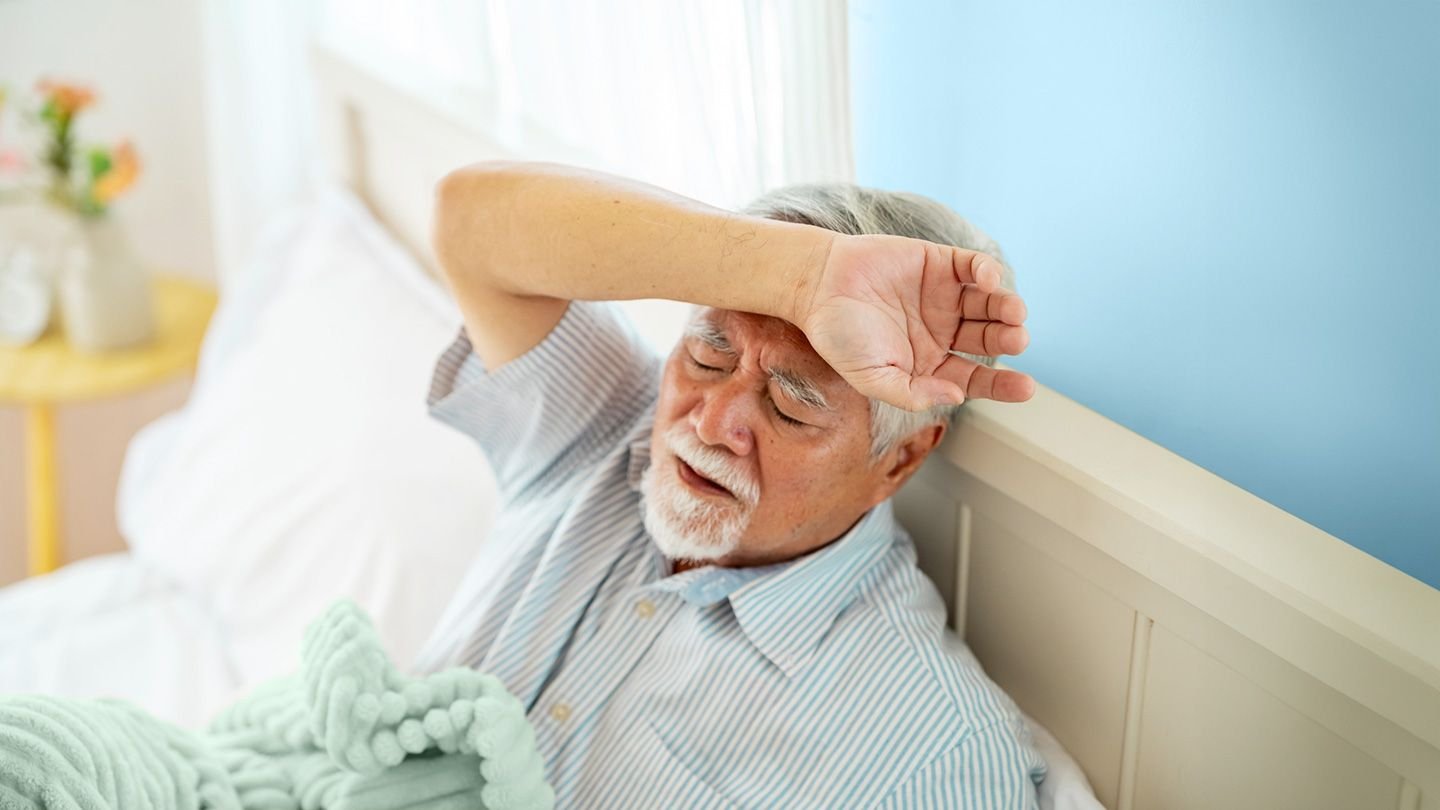
Treating CLL-Related Night Sweats
If your doctor rules out other causes, the most effective way to deal with night sweats is to treat the CLL itself. “There’s no medication that specifically addresses night sweats caused by leukemia or lymphoma,” says Dr. Alderuccio. “However, once the disease is controlled, disease-related night sweats typically resolve.”
CLL usually progresses slowly. Instead of starting treatment as soon as you’re diagnosed, you may spend months or even years in active surveillance, with regular checkups and tests.
[4]
Night sweats are part of a group of symptoms called B symptoms that can indicate that the cancer is progressing. Others include:
[5]
- Unexplained fevers
- Unintentional weight loss
- Extreme fatigue
“New or worsening drenching night sweats are especially important to report if you’re being monitored without treatment,” says Dr. Heyman. “Your healthcare team will then look at whether your CLL is becoming more active, and if initiation of therapy is warranted.”
Several treatment options are available for CLL, including:
- Targeted therapies
- Chemotherapy
- Immunotherapy
The first-line treatment for active CLL is usually a targeted therapy like a Bruton’s tyrosine kinase inhibitor or B cell lymphoma 2 inhibitor that attacks specific proteins in cancer cells. But the choice depends on different factors, such as your age and overall health, whether the leukemia cells have certain changes in their genes, and your personal preferences.
[6]
