
A thought I’ve been noodling on lately is how the more we use AI, the more likely we are to be replaced by it.
Let’s say your entire day is spent using AI. This is currently happening with some programmers, who “spend 12-hour days pressing enter”. First of all, I feel for these people—what a soul-crushing way to work. It’s no wonder so many of us feel negatively about the technology rather than empowered by it.
To me, two things about AI replacing tasks in our work are true:
- The more guidance we give to AI as we have it do our work for us, the more we are really training our eventual replacement.
- The more of our day we spend “pressing Enter”, the more of our tasks will simply be done by AI at some point—once AI guides itself and does the “Entering” for us.
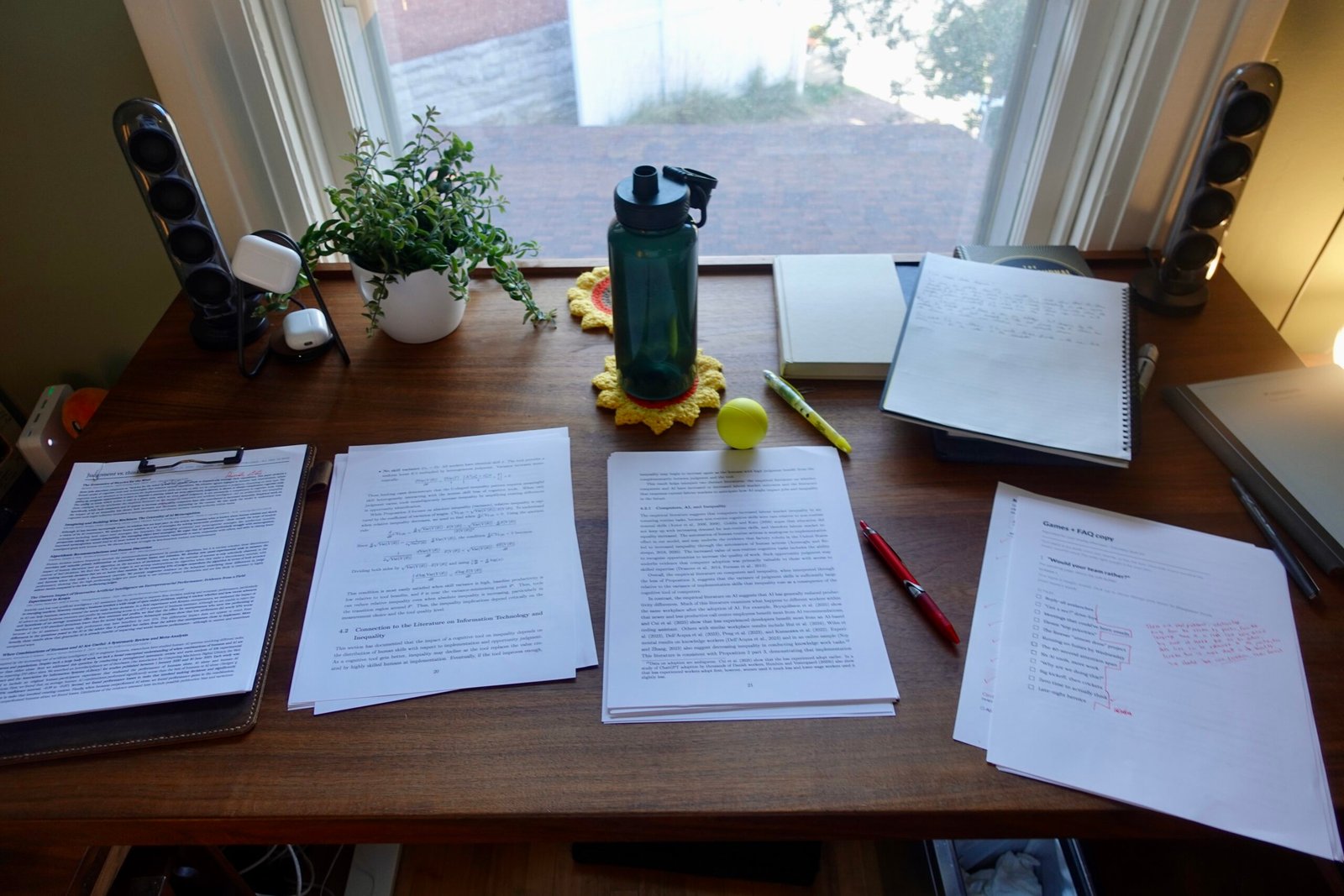
This is why I’ve been loving my analog afternoon experiment so much. AI cannot do analog work. And that may be precisely what makes analog work valuable.
My friend David once told me a story of someone who wanted to be able to get all of his work done on his iPad. His thinking was simple: the busywork of computer work—the constant alerts, the file management, the in-the-weeds tinkery-type tasks—gets abstracted away. And you become someone who is an orchestrator of the work that gets done, rather than someone who is in the weeds with it. iPad work tends to be slower and at a higher level of abstraction than work on a traditional PC.
I’m of the same mind with analog work. In my 13+ years of self-employment, nearly all of my work has been digital. I’m only a week into the analog experiment, but let me tell you: I am loving it. Analog work lives at a level of abstraction that AI cannot access—especially with the tasks we can only do in the analog world.
Intentional AI · A podcast with Chris Bailey & David Sparks
A practical, tactical podcast about using AI to become more productive—with no hype and no doom, just practical advice for using AI intentionally.
David Sparks and I try out AI tools in our own work and report back: what’s worth your time and attention, and what isn’t?
If this article got you thinking about what AI is doing to your time and attention, check out my related podcast, Intentional AI.
Listen to Intentional AI →Listen to the latest episode →Listen to Intentional AI →
What’s the practical, tactical takeaway here?
First of all, if a large portion of your job involves pressing Enter, I’m sorry and I feel for you.
But regardless of who you are, this is something to be mindful of. Ask: How much of your day do you spend just prodding AI along so it can do its thing? Delegate these tasks to others, if you can, assuming they have the judgment to provide it with good guidance.
Second: deliberately carve out time for doing analog work. This can feel like an odd act of rebellion in the intelligence age, and in a way that’s the point. Carve out some time for work that only you can do.
A few of my favorite task types from my analog afternoons:
- Brainstorm long-term or strategic projects. I’m having a blast creating an AI productivity keynote right now, as well as mapping out improvements to make to my website. I’m also having fun brainstorming how to compete less with AI with the work that I do—like adding free features to the values test to help people connect with their humanness 🙂
- Map out unstructured tasks. As I chat about in the course, we put off anything unstructured. Planning unstructured tasks reduces procrastination significantly. But we need a small “island of intention” from which to map out projects like these. For this, an analog ritual works wonders.
- Read briefings—including those created by AI. Even if you spend all day using AI, have it prepare analog briefings for you, so you can step back from and plan your work.
- Read! Invest in your skills, like learning how to become more intentional. Or print off and read a report about the state of your industry, to think even more strategically.
I’m also loving reading academic research in my analog time, but don’t recommend that for everyone 😉
Analog work is slower and more deliberate than digital work. It’s also more proactive, rather than reactive. And it’s more pleasant, once you adjust to it being less stimulating. Embrace it—even if you can only plan your days the analog way.
Slowing down, you’ll find you become far more deliberate and intentional.
