

Everywhere I turn, I see people using robot vacuums, and although I’m perfectly happy with my Shark upright vacuum cleaner, it does make me think whether my next purchase will give me extra time to crash out on the couch.
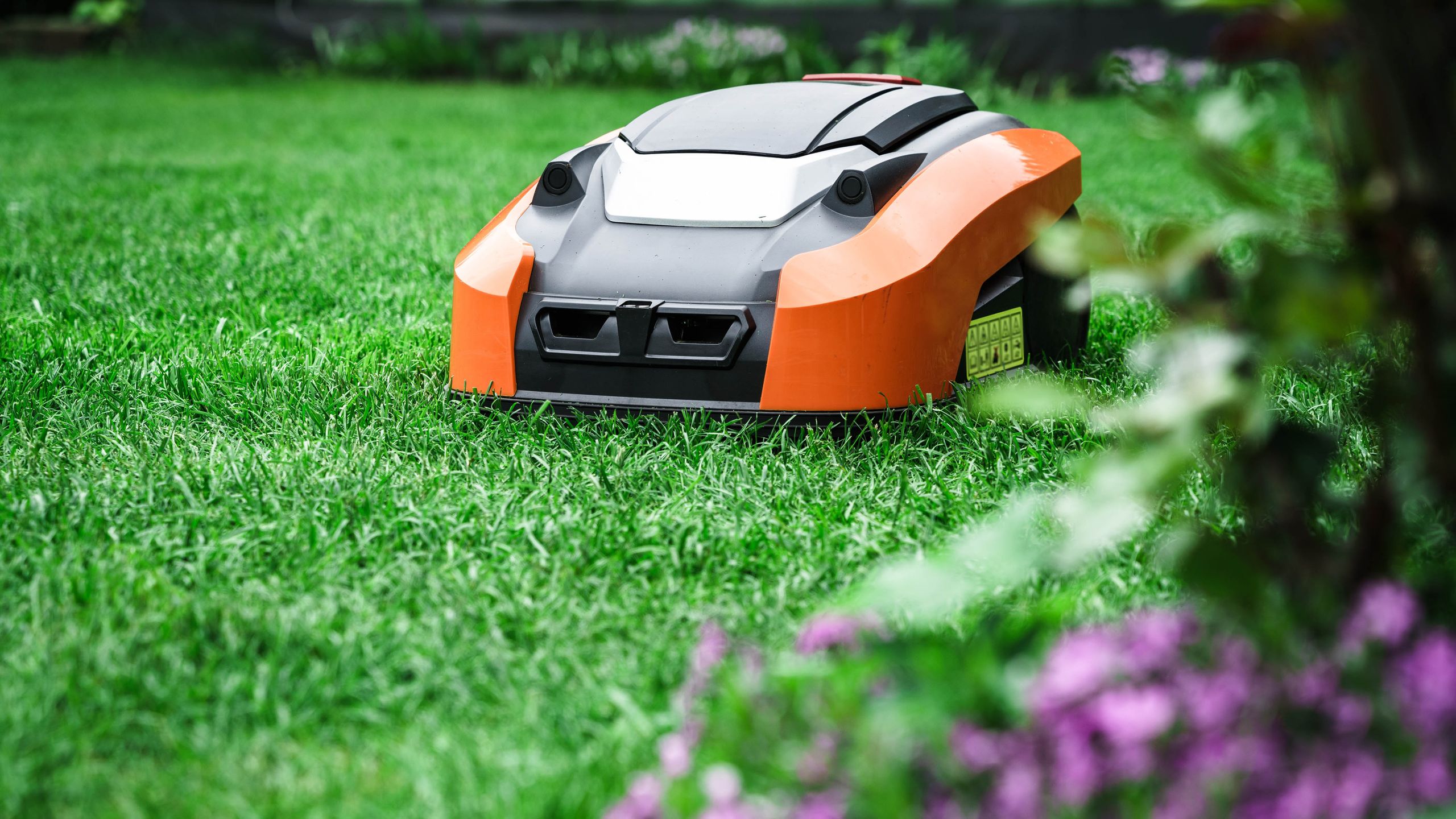
What’s more, robots are also taking over outside in our yards. Instead of seeing your neighbors diligently mowing their lawns, you’re more likely to spot them sipping a cold drink while their robot lawnmower does all the hard work.
Article continues below
You may like
You need to do some serious thinking before you invest in a lawnmower to make sure it can tackle your lawn. With this in mind, I approached lawn care experts to ask when your lawn isn’t suitable for a robot lawnmower.
1. When a robot lawnmower isn’t the best choice
(Image credit: Tom’s Guide)
“Robotic mowers can work on a wide range of lawns, but not every yard is a perfect fit,” says Kevin Caleca, NA Robotic Product Manager at Husqvarna. “Complex layouts with disconnected sections, stairs, or very narrow passages can require more planning or specialized setups.”
Jonathan Davis, grass expert at Lawnsmith, adds that it’s not just about awkward areas, “Robot mowers work best on reasonably even, well-defined grass areas. If your lawn is on the wild side, heavily obstructed or like a meadow, you’ll see the limitations of a robot mower quickly.”
2. Bumps can be a problem
Whether a robot lawnmower can handle a bumpy lawn will depend on the model and a few other factors.
“Most robot mowers can handle some minor bumps and slightly uneven ground,” Davis said. “But if it’s properly lumpy, with ankle-rolling divots, you’ll end up with patchy cuts, scalping and a potentially stuck mower.”
However, he does suggest that if your lawn is uneven, a layer of topsoil can help rectify the problem.
3. Steep slopes are a challenge
(Image credit: RoboUP)
The same is true for sloping lawns; it depends on the mower’s capabilities. While you can expect a standard robot lawn mower to handle inclines of 20-30%, according to Davis, others are designed to cut steeper lawns.
Caleca adds that Husqvarna’s 435 iQ series Automower is designed to handle up to a 70% slope, while the brand’s iQ models are rated for up to 45%.
What to read next
However, Gene Caballero, co-founder at GreenPal, says you will pay for this functionality. “There are some mowers that are specifically designed for steeper grades, but they are very, very expensive and more for commercial use.”
And of course, it’s cutting capability also depends on the conditions. “If the grass is slightly damp, you run the risk of it slipping. Any edges on slopes can also cause problems for your mower,” says Davis.
4. You have a small lawn
(Image credit: Shutterstock)
If you have a small lawn, you might think it’s not worth investing in a robot lawnmower, and you are probably right. “Robot mowers are recommended for large lawns and grassed areas that take a lot of maintaining. If it takes you 5-10 minutes to mow your lawn, a robot is probably not needed,” says Davis.
Instead, he suggests a smarter splurge would be investing in a cordless mower.
However, it all depends on whether you want to give up mowing your lawn. If you don’t want to call on the help of a lawn mowing service, a robot lawnmower could be the best choice for you.
5. Your lawn is split into sections
If, like me, your lawn is split into sections with paths and gravel areas, you may be wondering whether a robot lawnmower can cope with the layout.
“Paths, patios and graveled areas can be tricky. While some robot mowers can handle multiple zones, you’d need to be very careful when you’re setting it up, using boundary wires or the mower’s mapping,” says Davis.
Issues such as gravel paths can also stop a mower or damage its blades if it continues across them. “There’s also a risk of stones being flung by the blades and causing nearby damage,” he adds.
However, if you have a completed layout and pathways between lawn sections, Davis says, “It is manageable but not seamless. If your lawn is fragmented, the time you spend setting the mower on the right track might take longer than just mowing the lawn yourself.”
Caleca explains that handling multiple zones and surfaces is an area where robotic mowing technology has advanced quickly. With this in mind, we can look forward to these challenges being overcome in the future.
6. Your dog has dug holes in your lawn
(Image credit: Shutterstock)
While small divots are usually not an issue, as they can be filled in, Davis says, “if your lawn resembles a minefield, it can cause problems when mowing.”
And if you have a playful dog that likes to bury its toys in your neatly mowed lawn, it could be too much of a challenge for a robot lawnmower.
Davis adds, “The robot’s wheels could get stuck, your cut could end up being uneven, but it could cause blade damage if there are any rocks dug up, before your mower cuts your lawn.”
7. Your lawn has poor drainage and gets water-logged
The general advice among the lawn experts is to never mow a water-logged lawn with either a robot or a standard mower. Davis, says it’s especially important to avoid using a robot mower, as the wheels are likely to spin and cause ruts, the mower will get stuck, and it will result in a poor overall cutting performance.
However, Caleco says that robotic mowers can operate in wet grass, but extremely wet conditions will result in slipping or rutting, regardless of the brand.
Although he explains that some robotic mowers with advanced systems can operate during rainfall and can integrate with weather data to help automate those decisions and pause mowing until conditions improve.
How to improve your lawn’s drainage
Drainage in your lawn can be fixed by improving aeration and filling in uneven surfaces where water pools.
The final cut
(Image credit: Segway)
Before you invest in a robot lawnmower, remember that not all lawns are the same. You need to consider your lawn’s size, its gradient and any challenges, such as split areas. Then, you can decide whether a robot lawnmower is the right solution for your yard, and if so, match one that’s compatible with your needs.
Gardening essentials we love
Follow Tom’s Guide on Google News and add us as a preferred source to get our up-to-date news, analysis, and reviews in your feeds. Subscribe to Tom’s Guide on YouTube and follow us on TikTok.
