

To sell the idea of last year’s Wienie 500 to Oscar Mayer, creative agency Johannes Leonardo used AI to show what a race among the iconic Wienermobiles might look like when they took to the Indianapolis Motor Speedway’s historic oval.
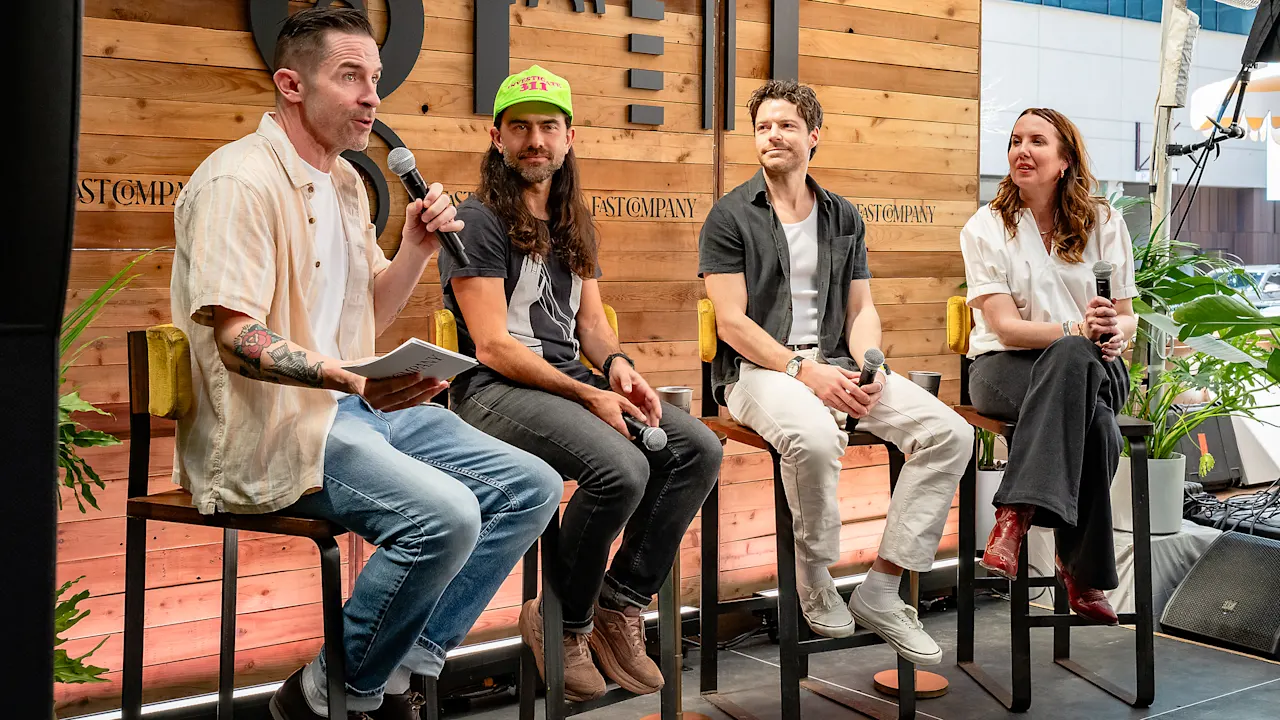
“That is an inherently brilliant idea that most people will go, ‘That’s fun,’” said the agency’s CEO, Helen Andrews, during a panel discussion at the Fast Company Grill at SXSW. “It’s a good example of how AI can accelerate creativity, not replace it.”
While AI can be a powerful way for brands to accelerate production and analyze consumer data, creative types must recognize that just because they can use these tools doesn’t mean they should.
This is particularly true as consumers become better attuned to sussing out what’s authentic and what’s not, which puts a premium on good ideas and experiences that really resonate with audiences.
THE PREMIUM FOR A PERSONAL TOUCH
While Liquid Death has found that AI can be useful for “little bits here and there,” as a comedy-led beverage brand, maintaining a human touch is a necessity, said Andy Pearson, vice president of creative, noting, “Everything we make, I want it to feel like it’s made by humans.”
Maintaining a sense of humanity is important, particularly as people crave more in-person experiences and a sense of “real authenticity,” Pearson said. “It’s something that I think as our eyes deceive us more and more will become much more important.”
It’s also vital that brands tap into how best to connect with consumers by recognizing what AI can’t change, said James Chester, CEO of WVN, which uses AI technology to help brands optimize their physical spaces.
“People want to be in-person,” Chester said. “And I think that it will get more valuable as online life becomes more of a commodity, less personal, and we start to live in this sort of blended reality of like, ‘Oh my God, this is all fake. I actually have to just go talk to my buddy.’”
