

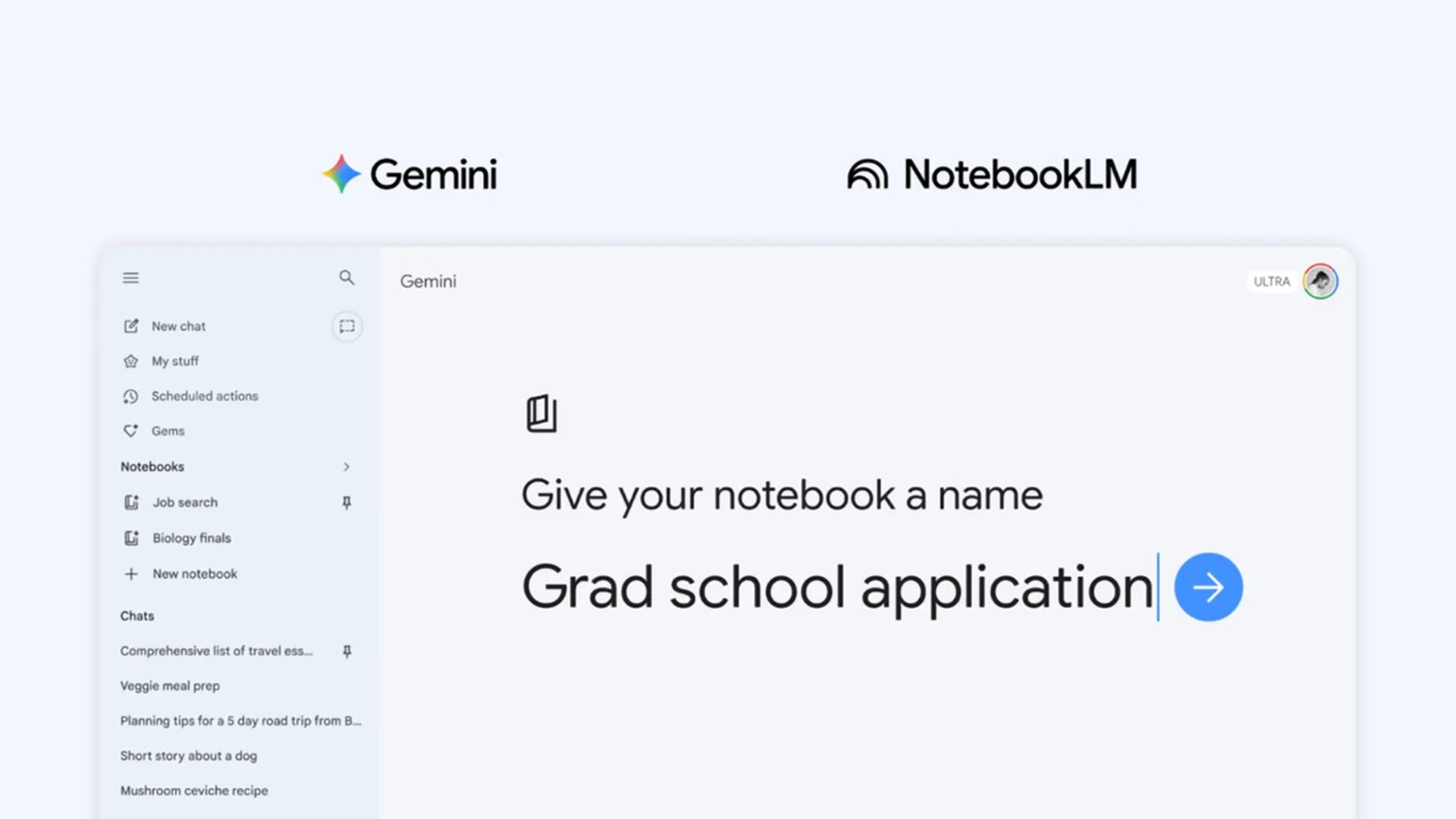
Google has made its Gemini Notebooks feature free for all users. Now, instead of starting over every time, you get a space where chats, files, and instructions live together and build on each other. Google describes these notebooks as personal knowledge bases, which is another way of saying Gemini can finally remember what you were doing and keep going.
Notebooks are great for the small, repeated things that usually fall apart because you have to keep re-explaining them. You don’t need them for big, complex projects, but once you start using them, you might just default to them when engaging with Gemini. To get the most out of Notebooks takes a few attempts, but here are some useful tips to make them the perfect way to have Gemini remember you and how you work.
1. Treat a notebook like your “ongoing life admin” space
(Image credit: Google)
This is a good tip for when you’ve used Gemini a lot already, but not Notebooks. Start by creating one notebook for the kind of tasks that never quite stay organized. Things like errands, reminders, subscriptions, and random to-dos. Drop in notes, paste in old chats, and add anything you would normally scatter across apps.
Article continues below
You may like
Then try a prompt like: “Based on everything in this notebook, organize my tasks for this week into a simple plan.” Remember that Gemini already has your messy, real-world context from previous interactions. The key is that you are not starting from zero.
The result feels practical in a way that normal AI responses do not. It reflects what you actually have to do and becomes a running record that gets easier to use over time.
2. Use it as a shared memory
Every day decisions tend to repeat themselves. What to order, what you liked last time, what you said you would try again. The Notebooks you make can keep track of all of that without any extra effort.
Add things like past orders, quick notes about meals, or even copied text messages. Then use a prompt such as: “Suggest dinner tonight based on what is already in this notebook.”
Because Gemini pulls from your actual history, the suggestions feel less random. The AI can spot patterns, avoid repeats, and put weight on things you already like. It might even remind you of something you like.
3. Clean up messy notes
Most people have a pile of notes that never quite turn into anything. A notebook is a good place to collect them without worrying about structure. Drop in everything as it comes to you.
Once there is enough material, try asking it to: “Turn everything in this notebook into a clear plan I can follow.” This could be anything from organizing a weekend to figuring out a new workout routine.
What to read next
Gemini won’t just come up with something independently. It will reshape what is already there so that what you get is close to something you would have made yourself, just more organized.
4. Set the tone
(Image credit: RØDE)
One of the simplest but most effective uses of a notebook is setting instructions at the top. You can tell Gemini how you want responses to sound or be structured, and it will carry that forward.
You might write: “Keep responses concise, practical, and lightly conversational.” After that, you can just ask questions without restating them every time.
This works because notebooks store custom instructions alongside everything else. The effect is subtle, but the AI will feel more consistent, and you spend less time tweaking prompts just to get the right tone.
5. Make a lot of notebooks
(Image credit: Tosnail)
Gemini Notebooks really click when you stop trying to put everything in one place. Instead, create separate notebooks for different areas. One for daily tasks, one for planning, one for hobbies, and so on.
Then use prompts that assume that context. I don’t need any other details for a particular project in a notebook. I can just write: “Using this notebook, suggest what I should focus on next.” Because each notebook has a clear purpose, Gemini’s responses become more targeted.
Over time, each one becomes its own little world of tasks. You create spaces where projects can grow, rather than just organizing existing data. It’s still Gemini underneath, but now the AI can be much better at tracking what you are doing. It can pull from past chats, files, and instructions all at once, instead of treating each interaction as new.
That continuity is what changes the experience. The more you use a notebook, the more it starts to feel like it is working with you rather than responding to you.
The most useful AI upgrade may simply be better recall, rather than just bringing more power to bear on each answer.
Follow TechRadar on Google News and add us as a preferred source to get our expert news, reviews, and opinion in your feeds. Make sure to click the Follow button!
And of course you can also follow TechRadar on TikTok for news, reviews, unboxings in video form, and get regular updates from us on WhatsApp too.
The best business laptops for all budgets
Our top picks, based on real-world testing and comparisons
