

FOTOmcfly/Shutterstock
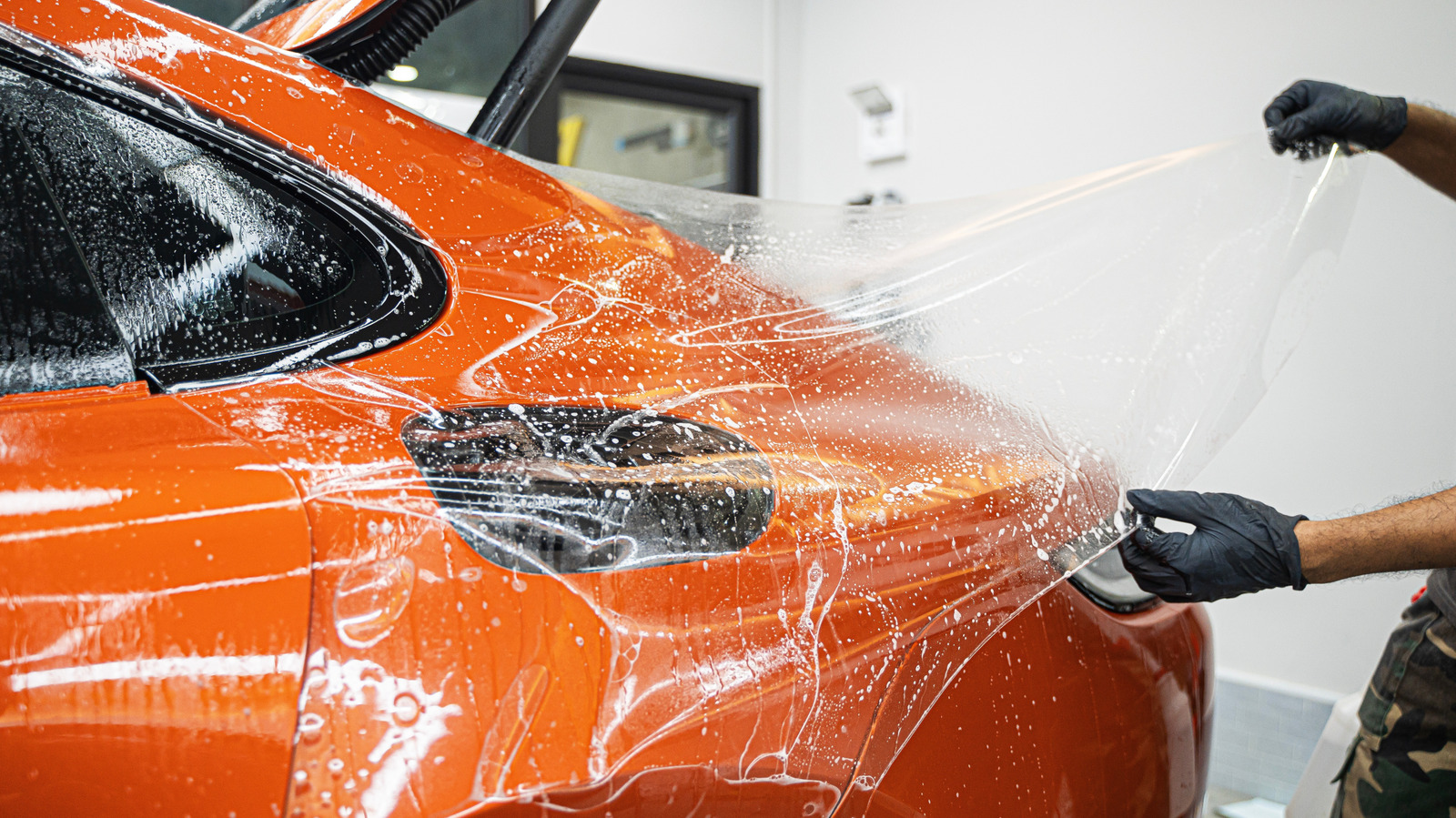
Paint protection film (PPF) is a costly-yet-ingenious way to preserve the original look of your car’s paint. Besides the cost, PPF generally requires professional installation for flawless coverage and lasting protection, but the pros outweigh the cons if you don’t mind spending as much as $8,000 for full installation. PPF films come in colored, glossy, or matte finishes, while satin is catching on as the middle ground between glossy and matte.
Matte finishes are an acquired taste. It’s less about the look and more about the maintenance, since matte PPF requires matte-specific cleaners similar to matte paint. As for the difference between satin and glossy PPF, it also goes beyond the aesthetic appeal. It all boils down to long-term maintenance requirements and the cost.
Glossy PPF mimics the finish of clear coat paint while shielding the actual finish from intense UV exposure, acid rain, and environmental pollutants. It all sounds fine and dandy, but glossy PPF has inherited some of the drawbacks of shiny paint, too. Like paint, glossy PPF demands more frequent washing, cleaning, and detailing to look its best. But it’s also more prone to scratching and swirling, and the mirror-like shine tends to highlight imperfections like haze, orange peel, stretch marks, and water spots. On the flipside, glossy PPF is typically the most affordable, while matte or satin films are more expensive, owing to their uniqueness.
Satin PPF is neither glossy nor matte
DiPres/Shutterstock
Unlike glossy PPF that reflects light to deliver a shiny finish, satin PPF does not reflect as much light. By comparison, matte PPF suppresses all reflections entirely and dulls the lines and edges of the vehicle body, while satin tends to preserve the definitions while only muting some of the shine. Because of this, satin tends to hide scratches and imperfections better than glossy PPF, and this makes it better for older cars with mildly weathered paint.
Then again, surface defects are not too big of an issue with self-healing PPF films. These clear out scratches and imperfections by having the affected area treated with a heat gun, sun exposure, or simple hot water. Just to be clear, the self-healing properties of high-quality PPF are common across all types, whether colored, satin, or glossy. But it won’t self-heal if the scratch or damage is deep enough to penetrate the clear coat.
Furthermore, the semi-glossy appearance of satin PPF also covers dirt and fingerprints quite well, which means it doesn’t require as much cleaning or detailing. This makes satin a better choice for vehicles that are frequently parked outdoors or daily drivers that see a lot of highway miles. As for year-round protection, satin PPF is just as durable and capable as glossy PPF in shielding the finish. But satin might be a better option if you’re pining for a sleeker vibe that doesn’t require too much cleaning to look its best.
PPF is not maintenance-free
Asphotowed/Getty Images
Similarly to how a clear coat is a sacrificial layer to protect the paint color underneath, you can think of paint protection film as the layer that protects the clear coat from scratches, paint chips, and oxidation. And, like clear coat paint, PPF requires diligent maintenance to offer years of protection while still looking pristine — and this applies regardless of whether your car has the glossy or satin kind.
It’s best to resist washing your car for at least two to seven days after applying the PPF, since the film is still settling during the first week after the install. Once it’s fully healed to the surface, washing the vehicle every one or two weeks using pH-neutral cleaners will suffice in keeping the film clean and pristine. Rinse well with water before washing and dry the finish with a microfiber towel after washing to prevent water spots. You should also be careful around automatic car washes (which could already permanently scratch and swirl the paint) and remove stubborn contaminants promptly to prevent them from damaging the film.
