

Eugenesergeev/Getty Images
Since most measurements stateside are in freedom units, folks living here may not be familiar with the 7-7 rule of thumb. It isn’t a mandatory law, but more of a winter advisory for tires. For those not in the know, the 7-7 rule is about switching to winter tires when you notice daily temperatures are at or below seven degrees Celsius (that’s 45 degrees Fahrenheit) for seven days straight. It also works in reverse, when you’re swapping back to summer or all-season tires.
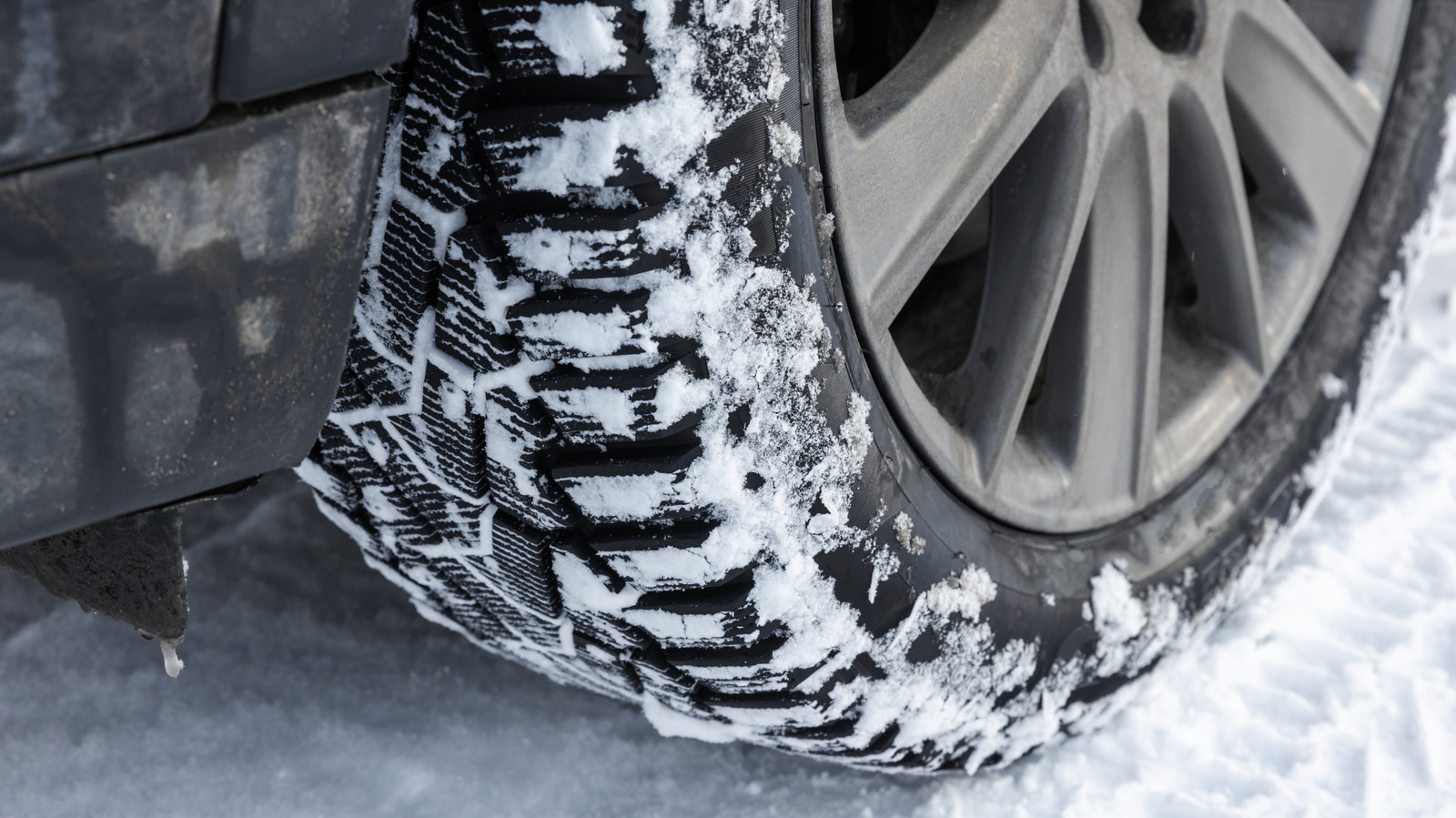
What if you’re a fan of Ron Swanson from “Parks and Recreation”, and don’t want someone telling you what to do? In that case, be prepared for slippery commutes. This is as much a safety concern as it is about tire life. Understand that winter tires are designed using specialized rubber compounds that remain flexible, unlike summer or all-season tires that typically harden when temperatures drop below 45 degrees. This, along with having deeper tread, allows winter tires to maintain traction even during adverse weather conditions.
But if you decide to ignore the 7-7 rule when it’s been nice and warm for the past week or so, you’re looking at extended tire wear, as winter tires (being soft) don’t hold up well when temperatures are consistently above 45 degrees. In particular, they perform worse when conditions are dry and the outside temperature is above 60 degrees (that’s 15-16 degrees Celsius in metric land).
You can be really pedantic about all this, tracking weather trends, daily temperatures, scheduling tire changes, and so on. Or, you can simply swap to winter tires when it’s super cold outside and the road conditions start looking a little too iffy.
The all-season debate
Mickanside/Shutterstock
What if you decide to muscle through this wintery weather with your all-season tires? Although that’s not a good idea, the exercise will probably land you in one of FailArmy’s winter-special videos. All-season tires do well when conditions aren’t too extreme. They’re in a happy middle ground, performing better than winter tires on dry conditions and better than summer tires when there’s a lot of ice and snow on the road. But when conditions become really demanding, all-season tires aren’t necessarily the one-size-fits-all solution you might expect.
In cold conditions, cars with winter tires can stop in much shorter distances than those equipped with all-seasons, as demonstrated in MotorTrend’s test of a Toyota RAV4, whose braking distance dropped by 23 feet just from using winter tires. There is, however, another option in the shape of all-weather tires. Combining some of the benefits of winter tires with those of all-seasons, they’re worth looking into those if you live someplace where winter weather is often short and sporadic.
The studded versus studless argument is also worth having, unless your state has banned studded tires altogether. There are advantages and disadvantages to using both, with the studded kind performing better on icy conditions than its non-studded counterpart. However, the latter offers a quieter ride with reasonably good winter weather performance.
Depending on the tire size, brand, and whether or not you have a separate set of wheels, switching to winter tires can cost you money — and sometimes a lot. If you can stomach that, great. But keep in mind that if you drive like a complete idiot, no amount of money or tires can save you from wintery mishaps.
