

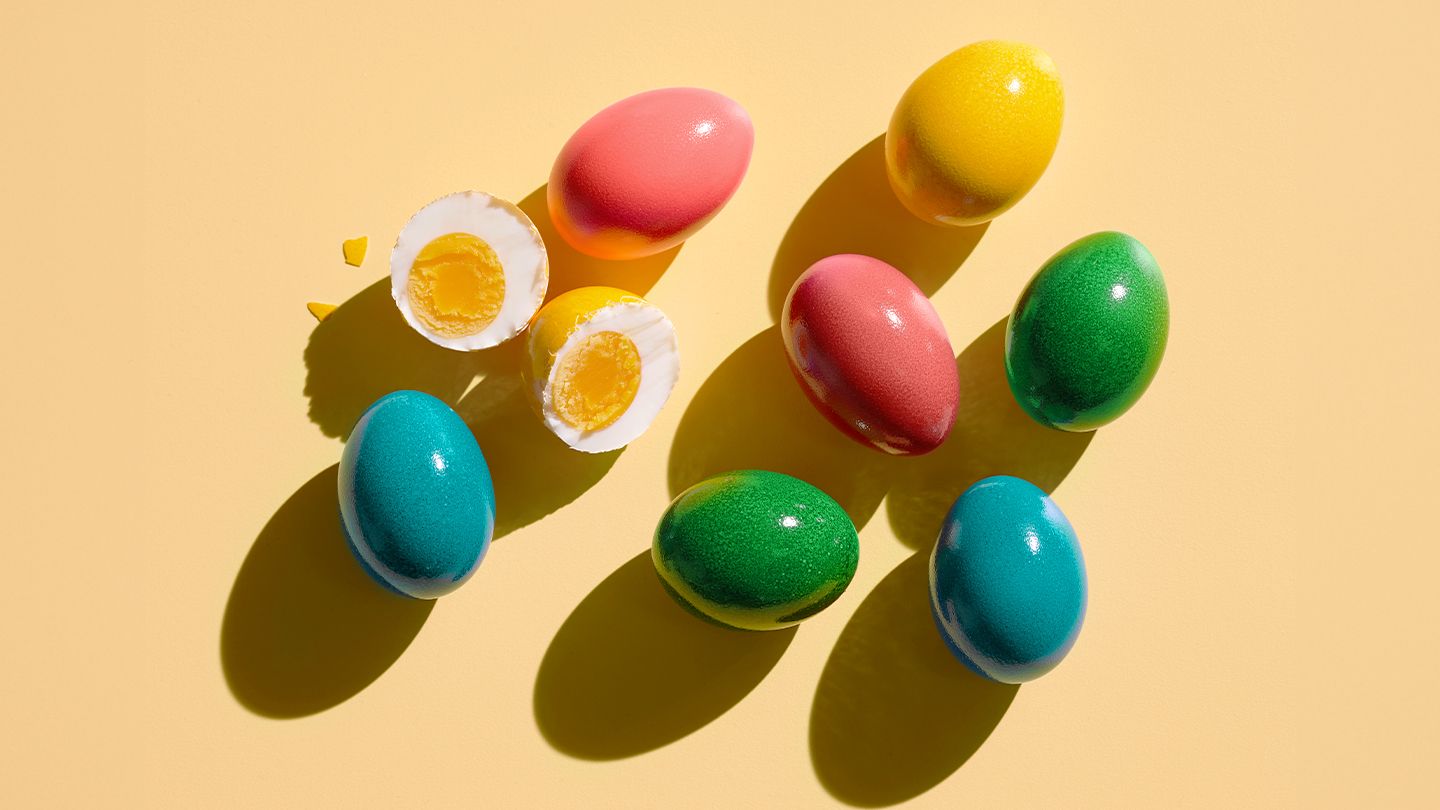
Hard-boiled eggs are perishable, which means they can harbor germs and spoil if not properly refrigerated.
[1]
Don’t leave Easter eggs out at room temperature for too long if you plan to eat them, says Francisco Diez-Gonzalez, PhD, a food science professor and director of the Center for Food Safety at the University of Georgia in Athens.
He recommends the “two-hour rule”: Don’t leave out perishable food for more than two hours if you plan to eat it. This holds true even if the weather is cooler, because bacteria can multiple quickly when the temperature is between 40 and 140 degrees F — what experts call the “danger zone.”
[2]
“To protect perishable food, [Easter eggs] should be kept below or above this temperature range,” Dr. Diez-Gonzalez adds.Easter eggs can also become contaminated if you hide them outdoors because of potential exposure to bacteria like salmonella, which is a common cause of food poisoning in the United States.
[3]
“Think bacteria present in bird poop, and if the placed egg were to come in contact with that bird poop,” says Martin Bucknavage, a senior food safety specialist at Penn State University’s Department of Food Science in University Park, Pennsylvania. “While the egg shell does provide some protection, we must remember that this is not impermeable, especially when the outer shell gets moisture on it.”
This contamination risk is lower if you take your Easter egg hunt indoors, but it’s not zero. “Because eggs may be hidden on surfaces that may not be clean, they may have microorganisms,” says Diez-Gonzalez.
To eliminate the possibility of eating contaminated eggs, you could prepare two batches: one for egg hunting purposes only, and another batch just for eating. “Even better,” says Bucknavage, “use the plastic eggs for hiding and keep the hard boiled eggs in the refrigerator until they are about to be eaten.”
