

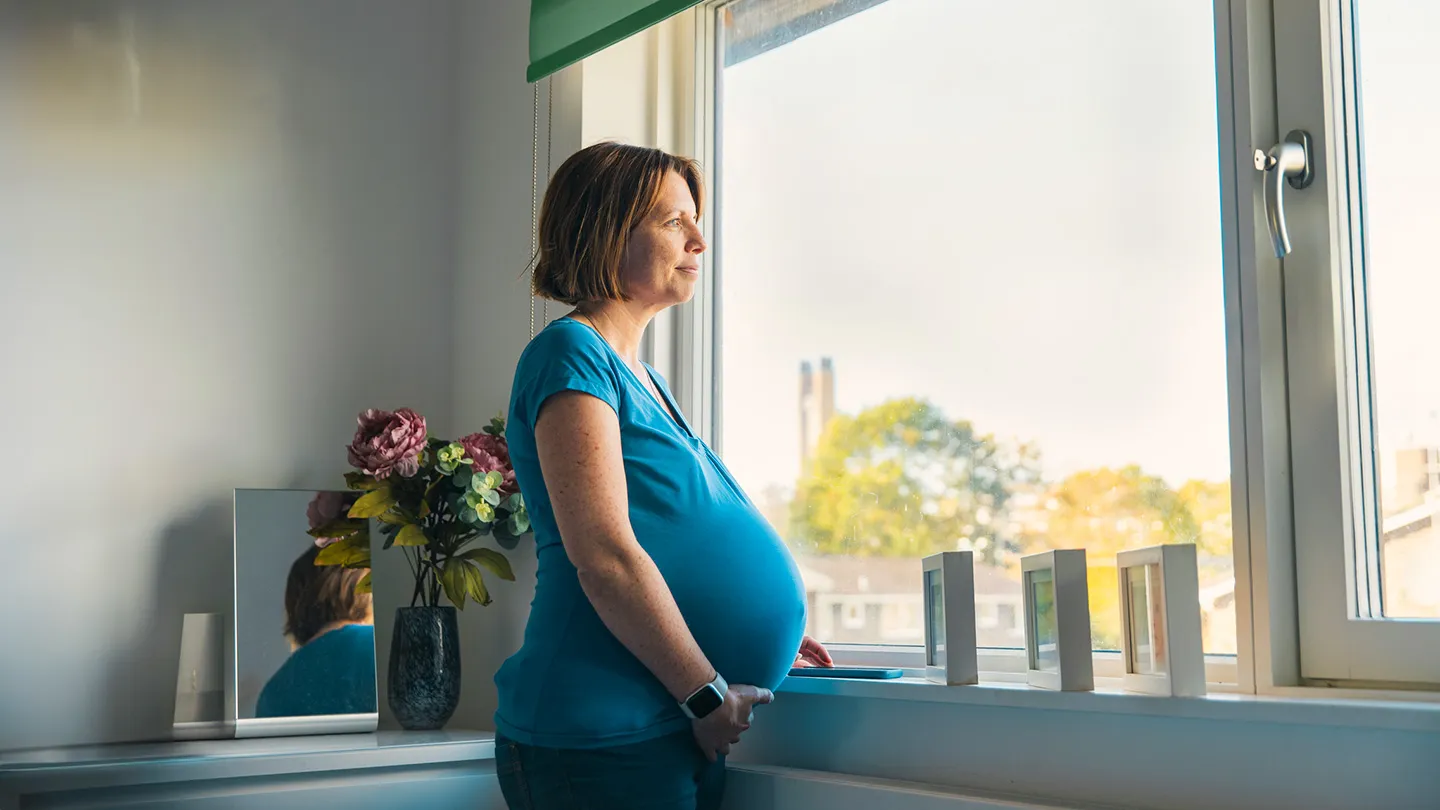
Menopause typically happens between age 45 and 55. But for a small percentage of women, it can happen before 45 and, for an even smaller group, before 40, says Mache Seibel, MD, a menopause expert and member of the medical advisory committee for the National Menopause Foundation.
[1]
Some women enter medical menopause earlier if they’ve had their ovaries removed as a method of cancer prevention, Dr. Seibel adds.
You’ve officially reached menopause when you haven’t had a period for 12 months — at that point, you have a 0 percent chance of getting pregnant naturally. But your fertility declines for years leading up to menopause and in fact even earlier.
Women are born with all the eggs they’ll ever have, but that reserve declines over time, says Seibel. With age, fewer healthy eggs survive in the ovaries. The overall health of those eggs declines, too, making it harder to get pregnant naturally during perimenopause, says Monica Christmas, MD, a board member of the Menopause Society, an associate professor of obstetrics and gynecology, and the director of the menopause program at UChicago Medicine. Eventually, ovulation slows and stops completely.
Peak fertility typically occurs between the late teens and late twenties. By age 30, your chances of getting pregnant start to decline, and that drop speeds up in your mid-thirties. By age 45, it’s a lot harder to conceive naturally, though still possible until you reach menopause. (Only 1 in 10 women in their forties or older gets pregnant in any given menstrual cycle.)
[2]
If you don’t want to get pregnant, you should continue using some form of birth control for 12 full months after your last period. This timing can get confusing because there’s not always a clear end to menstruation. “Most people will experience changes to their menstrual cycle that could last for just a few months beforehand to a couple of years beforehand,” Dr. Christmas says.
[3]
The menopausal transition isn’t linear: Fertility may be trending downward, Seibel says, but women may still have one or two healthy eggs. Occasionally, women think they’re no longer fertile and are surprised to discover they’ve gotten pregnant, he adds.
