

Valmedia/Getty Images
No matter how enthusiastic you are as a driver, you’ll eventually need to stop and rest on extended road trips. Data from the National Highway Traffic Safety Administration suggests that sleepiness behind the wheel (or drowsy driving) accounted for 91,000 crashes and around 800 deaths in 2017. NHTSA adds that the peak sleepiness periods for drivers are during the late afternoon and between midnight and 6 a.m. It’s why getting a good night’s sleep and avoiding driving during those hours is highly recommended to mitigate drowsy driving or falling asleep behind the wheel.
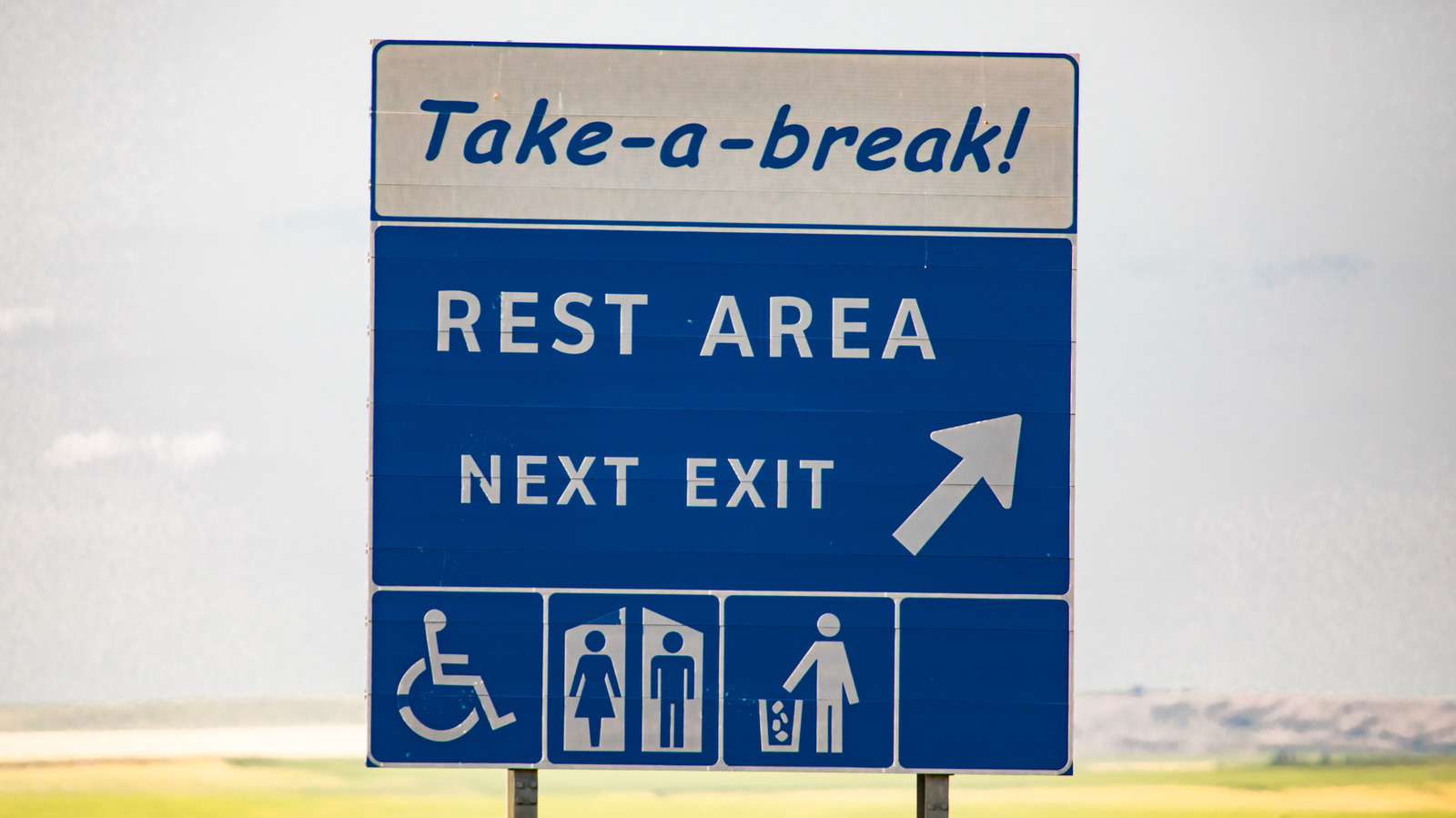
And it’s a good thing that rest areas are there to offer some respite from the grueling highway miles. Road-trippers typically encounter two types of rest areas in their travels. The first are state-run safety roadside rest areas with parking spaces, picnic tables, vending machines, and restrooms. The second are commercial service plazas that feature sprawling facilities like gas stations, recreational centers, shopping plazas, and popular restaurants or your favorite fast-food place.
Whether talking about government-funded roadside rest areas or privately owned service plazas, there’s no definitive yes or no answer to the question of whether it is legal to sleep there overnight. This depends on varying state laws and regulations. The good news is that most U.S. states permit overnight parking and sleeping inside a vehicle. The not-so-good part is that some places have restrictions or limits on how long you can sleep or stay there.
Overnight parking is not allowed in these U.S. states
Siphotography/Getty Images
The U.S. states that don’t allow overnight parking at rest areas (despite the facilities being open 24 hours a day) and make it virtually impossible to sleep in the car inlclude Colorado, Florida, Illinois, Kentucky, Maine, Maryland, Minnesota, North Carolina, South Dakota, Tennessee, Vermont, and Virginia.
Pennsylvania offers conditional rules. It allows up to two hours of parking at PennDOT rest areas, but the service plazas are open 24 hours a day without mentioning if overnight parking is allowed . Bear in mind that the restrictions and limits on how long you can stay at rest stops vary by state. For instance, overnight parking is banned in Colorado, Florida imposes a three-hour time limit for parked cars and up to 10 hours for commercial trucks, Illinois strictly imposes a three-hour limit, and you can sleep in your car for up to four hours when at rest areas in Kentucky, Maine, and Minnesota.
As you can tell by now, the states that don’t allow overnight parking still permit motorists to stay and rest for certain time periods, so the key here is to check the DOT website of the state, read the signs along the rest areas, and follow them.
You can stay in rest areas for as long as you like in these states
Olga Yastremska/Getty Images
Consider yourself lucky for visiting or driving through Arizona, Alaska, Arkansas, Connecticut, Georgia, Indiana, Michigan, Louisiana, Massachusetts, Missouri, Ohio, Utah, West Virginia, and Wyoming, since those states impose no official time limits on your stay in highway rest areas. Special mention goes to Michigan, where travelers can park overnight and stay for up to 48 hours.
Of course, it’s a different ballgame if you insist on camping instead of sleeping in your car. Many states allow overnight parking but prohibit camping in rest areas. Meanwhile, Nebraska doesn’t permit camping, but lets drivers stay at rest areas for up to 10 hours. Sleeping inside your car, truck, or RV (whether you’re rocking a fancy luxury RV or the world’s smallest RV) wouldn’t be a problem in such states, but don’t be surprised when law enforcement intervenes if they find you sleeping on the ground or under a makeshift tent.
Camping is almost always strictly prohibited in federal rest areas and service plazas, except in Arkansas, where camping is merely discouraged rather than banned altogether. Finally, remember to park your vehicle properly in the designated spots of the rest area, lock the doors whenever possible, and secure your belongings before calling it a night.
