

If there’s one gardening chore I truly despise, it’s battling with notorious weeds. While I’ve tried weed killers and DIY natural hacks, it feels like no matter how many I remove, they just pop up everywhere.
From my lawn and patio to poking through the gravel stones in my front yard, these weeds not only spread rapidly, but they also ruin my yard’s overall aesthetic.
So I decided to ask the gardening experts if they had a secret ‘insiders’ tip that I hadn’t caught onto, or a magical solution to banish weeds once and for all.
Article continues below
You may like
To my dismay, there isn’t a magical cure or ground-breaking product that I can use — however they all agree on one thing. In fact, this simple, two-fold tip is frequently overlooked while we focus on the clear-up. Here’s what they always recommend.
Get to the root of the problem
Removing a weed with a weeding tool (Image credit: Future)
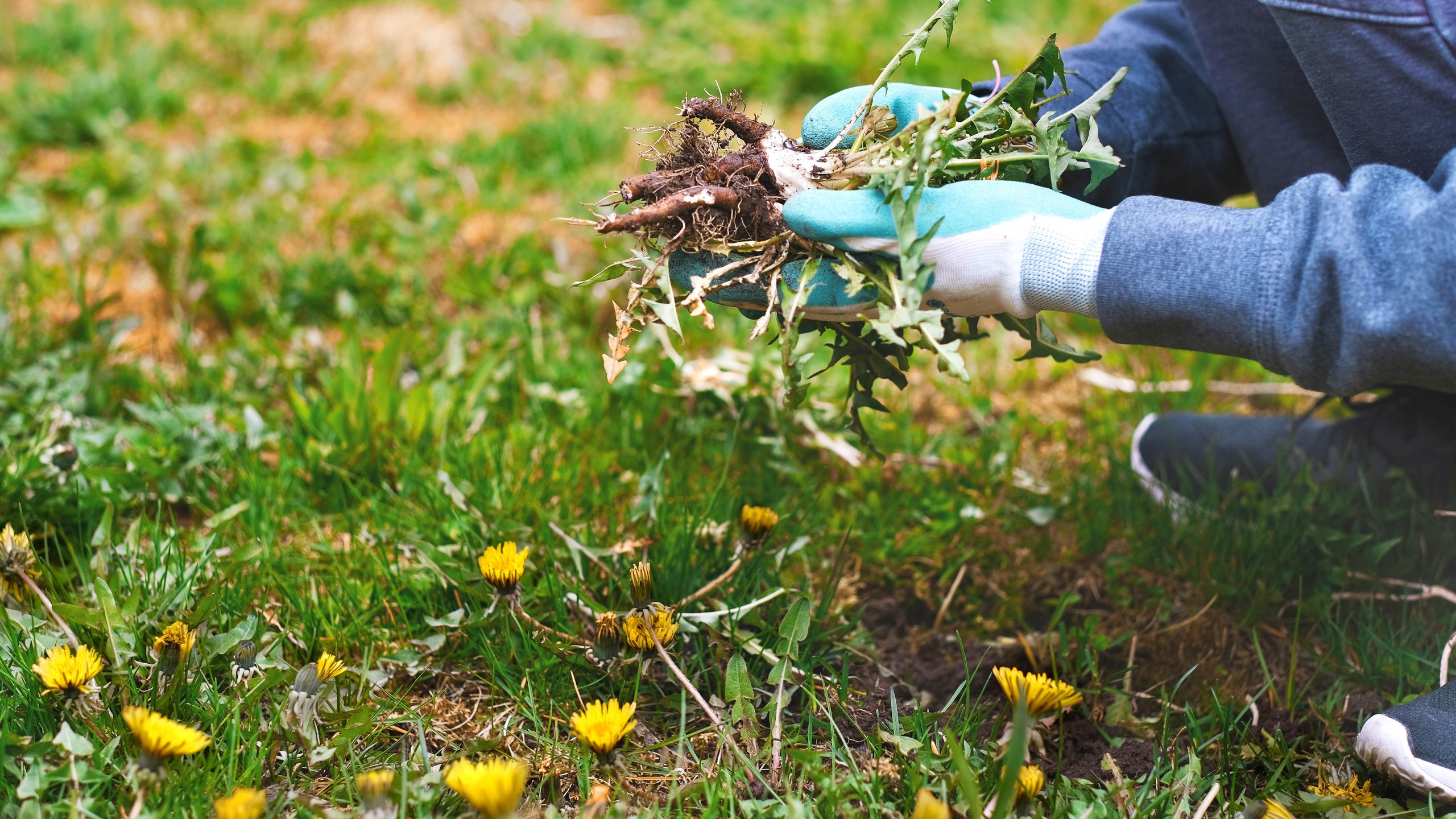
Experts all agree that the one (and only) way to tackle stubborn weeds for good is to deal with the root of the problem — literally.
“If you are dealing with weeds with deep taproots, such as thistle or dandelion, you need to remove all of the taproot growth if you do not want them to come back,” states Angelika Zaber, lawn care specialist and gardening expert at Online Turf.
“This can be done by digging out the taproots using hand forks or trowels. Alternatively, cut the new leaves as soon as they appear to force the plant to use the energy stored in the root, killing it over time.”
To get the job done, make sure you invest in the right weeding tools, and we would advise you spend a little extra for a durable one.
Remove the entire root system by simply pushing the tool’s blade 4-6 inches deep into the soil next to the dandelion stem. Angle the blade to go under the main root, then use the tool to lever the whole plant upward out of the ground.
“For true removal, you have to target the weed roots,” agrees Gene Caballero, cofounder of GreenPal. “Hand pulling them when the soil is moist or using a tool to extract the full root is paramount. You can also spot treat it with selective herbicides if needed.”
What to read next
Maintain a thick, healthy lawn
Mowing grass (Image credit: Shutterstock)
Another top expert-approved, preventative measure for controlling the spread of weeds is to maintain a lush, healthy lawn.
“I don’t think there is one true fix for removing weeds permanently, but a fail-proof approach is building a thick healthy lawn that will crowd out weeds naturally,” advises Caballero.
“The best method is to combine pre-emergent to stop new weeds, make sure you’re mowing at a proper height, and water deep and in frequently to help strengthen your turf. Doing this consistently is what actually makes weed removal permanent.”
Typically, it’s recommended that you follow the one-third rule when mowing — never cut more than a third of the grass height during any single mowing session. This is to avoid stressing your grass and promote thick growth that naturally suppresses weeds.
“Alternatively, if you do not mind using chemicals, herbicides are another great choice, while also being less physically demanding than the other two options,” adds Zaber. “However, these are the most effective when combined with good lawn care practices to prevent new weeds in the future.”
In addition, try to overseed thin or bare patches in your lawn where weeds commonly take root. And if you’re unsure whether your lawn needs it, check out our guide on how to tell if your lawn needs overseeding — 3 signs you can’t ignore.
So if you want to say goodbye to unsightly weeds for good, prevention is always better than the cure (and manual labor).
Follow Tom’s Guide on Google News and add us as a preferred source to get our up-to-date news, analysis, and reviews in your feeds.
