

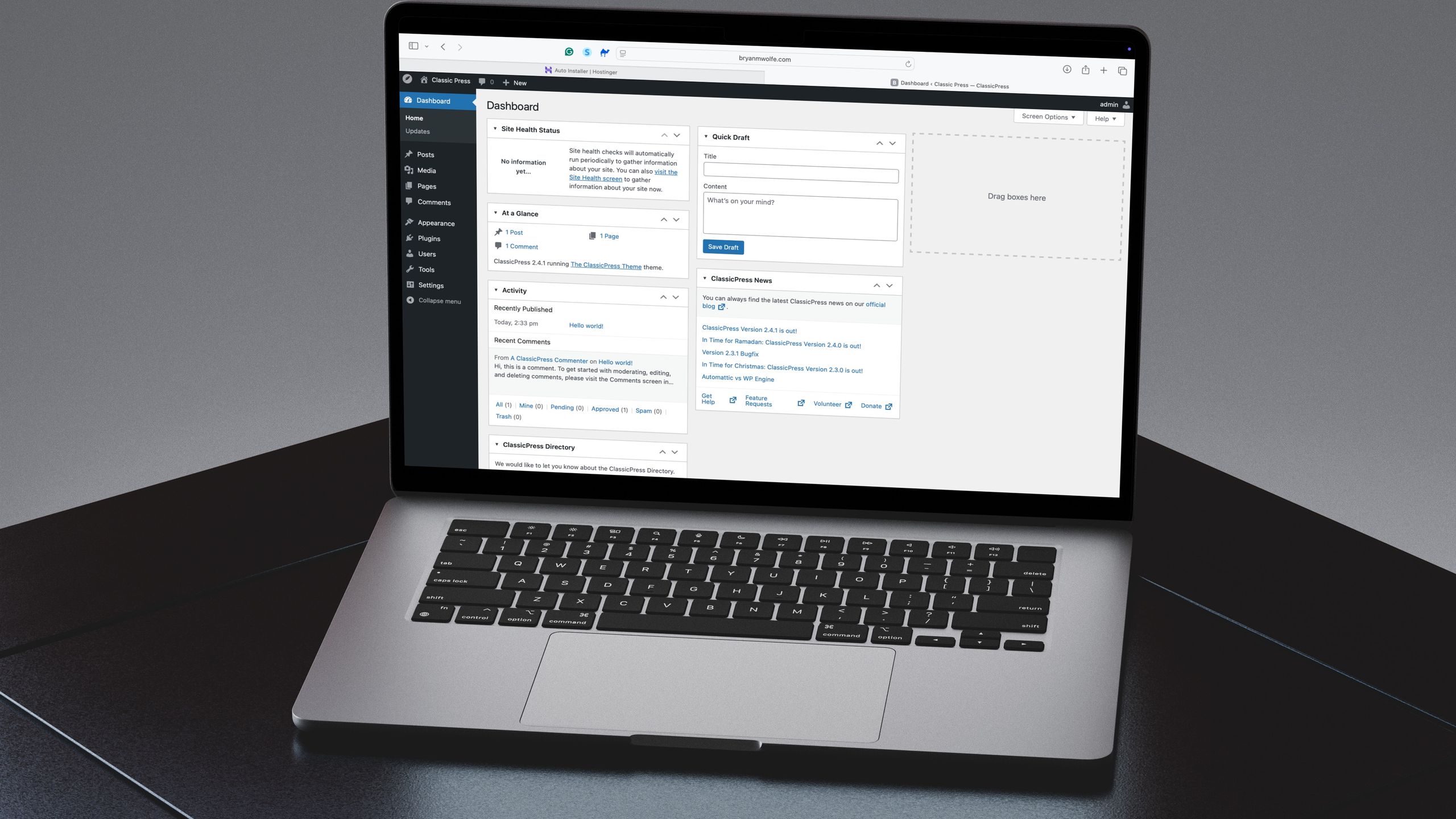
The majority of users recognize WordPress as one of their website management options. ClassicPress has established itself as a reliable and stable website management system. The developers created ClassicPress to preserve classic editing features and achieve long-term stability and performance. The community-driven fork of WordPress operates with backward compatibility and reduced release frequency to provide users with a dependable and organized platform.
I used ClassicPress as a tool and discovered its value as a straightforward platform. The experience with ClassicPress exceeded my expectations because it maintained the WordPress features I enjoyed during my previous use.
Article continues below
You may like
What is ClassicPress?
The development of ClassicPress occurred primarily because of WordPress 5.0’s significant changes, especially the introduction of the Gutenberg block editor. Users and developers who preferred the TinyMCE classic editor felt that WordPress forced the new block editor upon them without sufficient community input. ClassicPress emerged as a stable alternative to provide long-term support for the classic editing experience.
ClassicPress is working to establish itself as a lightweight CMS that delivers fast performance and customization options through core code optimization, feature elimination, and security and performance enhancement updates. The platform uses feature petitions to encourage community-driven development, while users gain more control over direction. WordPress faced criticism for its top-down decision-making approach.
(Image credit: Future)
Installing ClassicPress is a straightforward process similar to installing WordPress, making it accessible even for those with limited technical expertise. The first step involves downloading the ClassicPress installation files from the official ClassicPress website. Once you have the files, you’ll need to upload them to your web server, typically using an FTP client, and put them into the desired directory for your website. Concurrently, you must create a MySQL database and a corresponding user through your web hosting control panel (e.g., cPanel, Plesk). This database will store all your website’s content, settings, and user information.
After the files are uploaded and the database is ready, navigate to your website’s URL in your browser. This will initiate the ClassicPress installation wizard, which will guide you through entering your database credentials and creating an administrative user account for your new ClassicPress site. Follow the on-screen prompts, and within minutes, your ClassicPress website will be ready to go, providing a stable and reliable foundation for your online presence.
Installing ClassPress on Hostinger
When researching ClassicPress, I noticed it was installable on a Hostinger web-based server through the company’s Auto Installer. As the name suggests, this tool is slightly easier to install than the manual method mentioned above. You will want to check with your web-based server provider to see if they offer a similar tool.
To use the Auto Installer on Hostinger to install ClassicPress, follow these steps:
- Log in to your Hostinger account on the official Hostinger website.
- From the left-hand menu, click on Websites.
- Next to your account name, click Dashboard.
- In the left-hand menu, go to Websites again and select Auto Installer.
- Under the “Other” section, click Select.
- From the dropdown menu, choose ClassicPress.
- Click Select.
A pop-up window will appear to configure your ClassicPress installation. To keep it separate from your main site, it’s recommended that you install ClassicPress in a subdirectory of your website (e.g., `yourdomain.com/ClassicPress`). I
What to read next
f your main site isn’t yet activated, you can install ClassicPress at the root of your website.
During these next steps, you must assign a Website Title, Administrator Email, Administrator Username, and Administrator Password at the top of the pop-up window.
Next, click Advanced, then:
In the Enter Subdirectory box, type the name you want for your subdirectory (e.g., `classicpress`, `CP`, `classic`).
Ensure “Create new database” is selected, then assign a strong password for this new database.
Final steps
One final and familiar step is to get ClassicPress up and running on your website. Once the above steps are completed, go to this page: yourwebsite.com/classic/wp-admin, but include your website address and subdirectory for ClassicPress. From there, you’ll see the familiar WordPress login page, and you can begin creating your website.
Want to know more? We tested, reviewed, and rated all the best web hosting services.
