

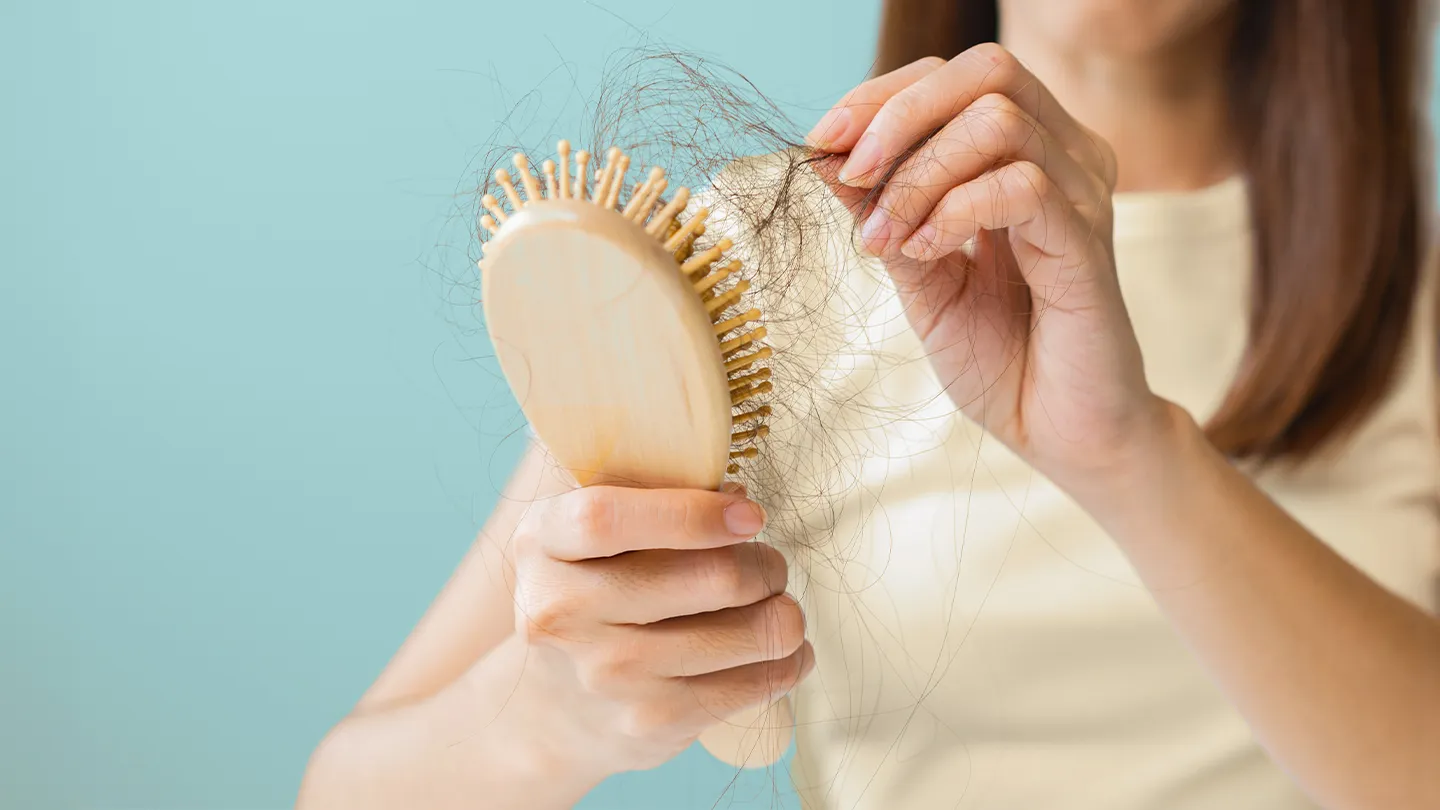
Seasonal shedding is a thing, but it’s not clearly understood. Shifts in seasons can temporarily slow or halt hair growth, which can result in a detectable increase in shedding soon after.
[2]
An older study of 823 women found that hair shedding peaks in summer; a second, less pronounced peak happens in spring; and hair shedding is least pronounced in the wintertime.
[3]
A more recent study, based on eight English-speaking countries’ Google search data from January 2004 to October 2016, found that summer and autumn were associated with more searches for the term “hair loss,” suggesting that those seasons were when more people experienced hair loss.
[4]
More research is needed to fully understand the reasons behind these results.
Some evolutionary theories about seasonal hair loss are also in play.
“Anthropologically, there was an advantage for hair to be thickest in winter for protection from cold,” says Dr. Lupo. “To get an increase in new hair, you must shed the existing hair.” This process is known as the hair growth cycle.
The Hair Growth Cycle
“Hair growth exists in cycles,” says Dr. Hirsch, which includes normal shedding.
The hair growth cycle is broken down into four stages:
[5]
- Anagen This is the active growth phase, when hair comes out of the follicle, lasting anywhere from two to eight years.
- Catagen During this two- to three-week transitional phase, hair follicles shrink and hair growth slows.
- Telogen In this resting phase, hair stops growing but doesn’t fall out. The scalp stays in this stage for about two to three months.
- Exogen Hair is actively shed from the scalp, which allows new hair to grow.
Other Reasons for Hair Loss
Beyond shedding season, there are several reasons that more hair might fall out than usual:
- Telogen Effluvium This is a temporary form of hair loss triggered by stress, such as from illness, surgery, or nutrient deficiencies. It typically shows up a few months after the stressful event.
[6]
- Anagen Effluvium Also a temporary condition, it’s most common after chemotherapy but can be associated with radiation or exposure to toxins. Hair may fall out quickly, but it typically grows back within a few months.
[7]
- Alopecia Areata This is an autoimmune disease in which the immune system attacks the hair follicles, leading to patches of hair loss.
[8]
- Androgenetic Alopecia Also known as female pattern hair loss, this the most prevalent type of permanent hair loss in women. The hair thins at the crown of the head or the part line becomes wider. It’s a progressive, chronic condition that requires ongoing treatment.
[9]
- Nutritional Deficiencies A diet lacking sufficient vitamins and minerals can have a negative impact on hair health.
[10]
- Hormonal Changes Shifts in estrogen levels after pregnancy or due to thyroid disorders can disrupt the hair growth cycle and lead to increased shedding a few months later.
[11]
