

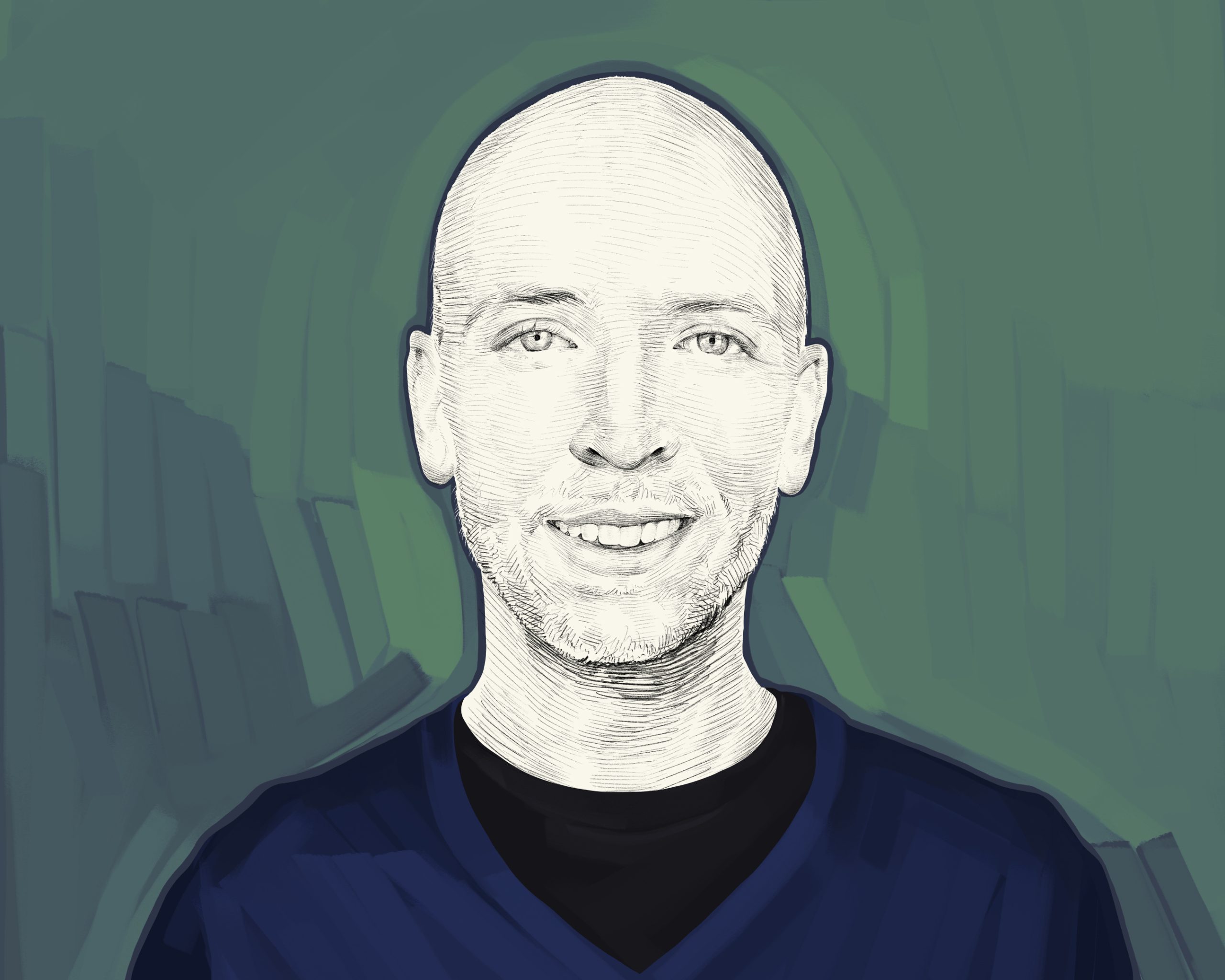
Welcome to another episode featuring a 4-Hour Workweek case study—a conversation with someone who has read the book, applied it, and built a life and a businesses I never could have imagined. In this episode, we have Brian Dean, the founder of Backlinko and Exploding Topics, both acquired by Semrush, which itself was recently acquired by Adobe for $1.9 billion. We cover geoarbitrage, testing assumptions cheaply, building a muse, automating income, and—the chapter almost everyone skips—Filling the Void.
Full introduction
Books, people, tools, and resources mentioned in the interview
Legal conditions/copyright information
4-Hour Workweek Success Story, Brian Dean — From Dad’s Basement to Selling Two Companies
Additional podcast platforms
Listen to this episode on Apple Podcasts, Spotify, Overcast, Podcast Addict, Pocket Casts, Castbox, YouTube Music, Amazon Music, Audible, or on your favorite podcast platform.
Transcripts may contain a few typos. With many episodes lasting 2+ hours, it can be difficult to catch minor errors. Enjoy!
Tim Ferriss: Brian, nice to meet you finally. Thank you for taking the time.
Brian Dean: Hey, great to be here.
Tim Ferriss: Brian, where should we begin? I’m thinking maybe because the impetus for this is somewhat around the connective tissue of The 4-Hour Workweek, should we just begin with how on earth you and The 4-Hour Workweek intersected? Maybe we start there?
Brian Dean: So it intersected at a really weird and sort of low time in my life where I had just started a PhD program at Purdue and I basically hated it. It was just overall not great experience. I went in gung ho, “I’m going to be a scientist,” and all this stuff. And then the hard reality of pipetting in a lab and having an advisor, breathing down your neck was like, “I can’t do this anymore. I’m out.” So my plan was to get a job because I had a degree. I was like, “Let me get a job as a dietician.” Unfortunately, that didn’t really work out and I ended up in my dad’s basement.
Tim Ferriss: What was the timing of this? This was what year, roughly?
Brian Dean: This was 2008. So I think the book was relatively new then.
Tim Ferriss: Yeah. 2008, that would’ve been a year after publication, let’s just say. And also not exactly the hottest job market for people who may not recall. It was a tough time overall because of the financial crisis.
Brian Dean: Totally unbeknownst to me as going to graduate school, spending most of my time at bars, drinking, the great financial crisis was over my head. Never heard of it until I started to get a job. And suddenly it became very real, very fast. So basically I was in my dad’s basement, broke, no girlfriend obviously, no real prospects. I’m just kind of lazily applying for jobs every morning and just sitting around and watching Jerry Springer in the afternoon. That’s pretty much my day.
And then one day I have an idea. I’m like, “I should start something.” I don’t know where this came from. I’m like, “I should start a search engine for nutrition questions. When people ask how much vitamin C is in a carrot, it’ll just give them the answers.” This is basically what an LLM would do way before and someone that’s not remotely qualified to come up with something like this.
So I was like, “How do I start a business?” It’d never crossed my mind before. I literally thought starting a business was like in The Office when Michael Scott gives this lecture and he’s like, “First, you need a building.” So I’m thinking this is this huge undertaking I’m about to do. So I go to the bookstore to find a book to help me get started. And I basically saw The 4-Hour Workweek, grabbed it, and it just sort of spoke to me.
Tim Ferriss: What happened after that?
Brian Dean: It blew my mind. I read the book. I’m like, “Well, I could start a business.” It was just a crazy, mind-blowing concept that someone has no experience was totally broke, could start something, not necessarily be a smash hit, but you could start something. So basically I just followed the book exactly as it was written. I mean, I literally had notes in the margins. You had those little Q&As at the end or little steps at the end. I would make sure I wouldn’t go past that page until I did everything. I was like, “I’m not going to…”
Tim Ferriss: My dream reader.
Brian Dean: I was like, “I’m not going to go to the next page until I’m good and ready.” So basically I followed the plan and then created an ebook about nutrition, how to help your back pain with nutrition.
Tim Ferriss: And we have so much to cover. I know I’m cheating a little bit, but I think it’s fair to say that your first attempt did not turn into the mega hit that you might’ve hoped.
Turns out it’s hard to get traffic, right? Or it can be hard to get traffic. And if you don’t have a budget for paid ads, well, I guess necessity is the mother of invention or at least learning. And just I want to add a sidebar here, which is this is so fucking common. It is incredibly common that you basically have your sort of first love/relationship. Seldom works out, right?
Brian Dean: Yeah.
Tim Ferriss: But you learn a lot and that leads to something else. But tell us about what you learned and how you adapted to that first experience.
Brian Dean: I spent all this time on creating a product that I thought was helpful, I thought was good. And then it was like, “Now what? How do you get people to actually see this thing?” And like you said, Tim, there’s paid ads, which wasn’t really something that I could do considering I was broke in my dad’s basement, having Dinty Moore beef stew for dinner every night, or so called free traffic, which I was like, “What? Free traffic? How does that work?” So of course I went all in on that and eventually sort of stumbled on this thing called “Search Engine Optimization,” which was like, you can rank in Google and people who are searching for what you sell, you can get in front of them. And I was like, “Oh, I’ve used Google.” And I never really understood that there was this whole world behind the scenes, figuring out how it works, trying to game the algorithm and stuff. And that sent me down the path of learning this thing called SEO.
Tim Ferriss: Also, I would say, just to paint a picture for folks, because I remember looking at this when I started my first, let’s call it real business, also out of necessity when everybody at the startup I joined got fired in 2000, 2001, not a great time for most dot com companies. So I was working off of my soon to expire COBRA healthcare in California and eating also microwave dinners. Or I remember I had a couple of favorites at Jack in the Box, which was in the parking lot of a Safeway. So that was my nutritional intake. Very similar, it sounds like, right? But slowly figuring out the mechanics behind these things that we use every day, right? And you took it certainly a lot further than I ever did. And it’s the Wild West, right? I mean, SEO can be, especially those days, kind of the Wild West.
So you built up a huge kind of portfolio of domains, it seems like, something like close to 200 or over 200. What was the game plan? When you started getting into SEO and then flashing forward, what was the sort of plan in terms of revenue generation?
Brian Dean: The idea was you’d have these one-page websites rank and then you’d have AdSense display ads on each of those. And back then, it was sort of a loophole that if you had a domain that matched the keyword exactly, then it was a massive advantage in the search results. So I would have lorealshampoo.org and I would just write a thousand words about why L’Oreal shampoo is great, which I obviously don’t really know a lot about.
Tim Ferriss: For those who can’t see the video, we are both completely bald. Yeah.
Brian Dean: And then putting AdSense ads on the pages times 200, and the idea is that you scale up enough and take a few steps later, you’ve got a private island or something.
Tim Ferriss: Yeah, right.
Brian Dean: That was the plan.
Tim Ferriss: Right. ABC dot dot dot M and then private island. So let’s backstep for a second because we can talk about the business and the business experiments and adventures, which we will, and misadventures, a.k.a. Panda Death, which we’ll probably get to. But if we’re looking back to your reading of the book, there are a couple of different directions as a choose your own adventure map that you can take. And part of that oftentimes is figuring out your target monthly income, doing exercises like Dreamlining, which people can find for free to figure out exactly what it is that you are building as a lifestyle and the things you want to do, et cetera. And you come up with this very precise, not necessarily accurate, but it’s a starting point number, right? Where were you when you’re going through all of this? Because you can build a business for the sake of building a business and generating all this cash, but then the question is, what do you do with that?
How does it inform your life? Were you thinking about that stuff at the time or was it just get out of the basement, and eat something besides the Dinty Moore stew?
Brian Dean: Have a proper meal. Yeah, exactly. Have a meal that’s not out of a can. So I just wrote that in the whole dreamlining section that was basically what I wrote. It changed. It morphed a little bit. At first it was that. And then during this building the 200 websites at some point, I was in Asia backpacking and then my whole world changed to 3k a month. I was like, “If you can get 3k a month in Thailand, you can live like a king.” So my whole goal just became to get 3k a month passive income. That was my entire focus. So it sort of shifted once I had sort of a lifestyle that I tried and liked, I was like, “Oh, I could live like a backpacker. I can do this.” So then it just became 3k a month for a long time. For, like, a year.
Tim Ferriss: For a year. Did you hit the 3k a month before the Google slap, which may be one and the same as the Panda update, I’m not sure. Maybe those are two separate things entirely, but where were you before things got pretty strongly corrected?
Brian Dean: Yeah, it was maybe a 3k a month around there for like a couple months. Had a good ride and then it kind of got slapped. Didn’t last long.
The first was a Panda update, as you mentioned, which was a very content-focused update. That was where —
Tim Ferriss: By Google.
Brian Dean: By Google. It was an update that basically was, “If your content is thin or repetitive or not helpful, we’re going to wipe you out.” And it was like one day they push a button and thousands of websites get completely obliterated, including mine.
Tim Ferriss: That’s a rough — where were you when this happened? Do you remember when you got the news?
Brian Dean: That first one… I got slapped twice. The first time didn’t scare me straight enough. So I went back to the — I was like, “Oh, I’ll just do a different type of black hat SEO and I’ll get away with it.” It didn’t work. So that one, I think I was in Thailand when it happened.
Tim Ferriss: So let’s then go to, you get scared straight as you put it, and you build your first, as I think you’ve put it, real site, right? Which isn’t L’Orealshampoo.org. It’s something else. When you decided to hop to the white hat side of things, what did you end up doing and why?
Brian Dean: So there was that first update and then a second update where I was in Spain and Granada and I went to my hostel, I checked the laptop and it was like, again, it was like a repeat of the Thailand experience. Everything dropped. This was a different set of websites that got knocked out. And I was like, “You know what? This is crazy. Why am I doing this? This is an insane way to live.” So then I was like, “I’m going to build this one real website.” And I was kind of inspired because there were these forums at the time with these marketing people and they were basically like, “Spam, spam, spam.” And there were a couple voices in there of people who were like, “Guys, build a real business. What are you guys doing? Build something real that’s durable, that’s not 100 percent reliant on Google.” And I kind of ignored those people.
And then once I got hit that second time, I was like, “Okay, it’s time to build something real.” So I basically built a sort of real site in the personal finance space, wrote real blog content, didn’t do any shady spammy stuff and tried to keep it on the up and up.
Tim Ferriss: And what is the bridge or what happens between that and then building Backlinko? How do you end up segueing? I mean, I guess this could be a very fast montage in the sort of fictionalized movie of your life, but what happened to go from there to Backlinko, which ultimately you ended up getting acquired? What transpired between those two?
Brian Dean: So once a site started to get a little bit of traction, I was like, “Wow, this is a whole world I didn’t know about. Real marketing, white hat SEO.” And it was fun. It was working and it was more enjoyable because I didn’t have to look over my shoulder that I was going to get hit with an update next week. And it was cool because I’m reaching out to other websites and they’re like, “Oh, this is really helpful,” And they’re linking to me. I’m not paying for links. They’re just naturally doing it. And I’m like, “How do I learn more about this?” This whole world opened up. I’m like, “How do I get better at this?” And all the advice that I read on all these white hat SEO blogs were basically vague advice, create great content, build relationships with other people, market your site in a — yeah.
What do you do with that?
Tim Ferriss: Lead with integrity. You’re like, “Okay, what’s my next step?” Very unclear.
Brian Dean: Exactly.
Tim Ferriss: All right.
Brian Dean: It was as vague as you could imagine.
Tim Ferriss: Then Backlinko is a case of sort of creating the thing that you couldn’t find?
Brian Dean: Exactly.
Tim Ferriss: Is that a fair way to put it?
Brian Dean: Yep.
Tim Ferriss: One thing that I saw here in the prep notes, which I was like, “Oh, that’s so smart,” and I wanted to highlight it is — there are a number of things, obviously, that you ended up doing really well that seemed to have set the stage for a lot of things that came. One of them was digging through Google Patents and engineer statements. And I’ll come back and expand on why this is smart, but it’ll probably become very obvious once you explain why you did it. Why were you digging through Google Patents and then engineer statements, are those part of the patents or are those something separate?
Brian Dean: Separate.
Tim Ferriss: Okay. So could you explain what you were doing?
Brian Dean: When I launched Backlinko, I was like, “There must be other people like me who are getting into this whole world of white hat SEO. They want to learn more about it and they’re disappointed about what’s out there.” And it turns out there was. I just didn’t know how to reach them at first. So I basically followed the same advice that I read for starting a blog, which was, you need to publish every week or every other day, and that’s how you build an audience. You just publish and pray that people come. So that’s what I did.
Tim Ferriss: People still give that advice. Publish and pray. Yeah, exactly.
Brian Dean: So yeah, I did that and banged my head against the wall. And I was like, “You know what?” I came up with an actually creative idea for a post that would be really special instead of just the stuff I was putting out every week, which was good. It was definitely actually decent to give myself some credit, but it wasn’t anything that’s going to grab you by the shirt and be like, “I need to read this.” It was just slightly above average and what was out there. I was really going on that consistency play. “If I do this consistently over time, there’ll be like a secret society that will just send me traffic as a reward for being so consistent.” I didn’t really have the whole thing planned out, to be honest. I just knew consistency equaled traffic at some point, and it honestly didn’t for me.
So I had this idea for a post, which was Google recently had said that there’s 200 ranking factors in the algorithm. So I was like, “Let’s just try to find them.” Obviously a lot of it’s going to be conjecture and guessing and speculation, but let’s just do a list of 200 instead of the list of 10 or 20 that I’d seen out there. And then I got to like 55 and I’m like, “Man, you have to really dig to find some of these.” And that’s when I went through the Google Patents and also people would interview Google engineers or they would give statements about, they’d be at a conference and they would give a talk and one of the slides would mention a ranking factor that they’re considering. So it took a lot of digging. It took like 20 to 25 hours to complete. this single post.
And that’s really why I was digging into all this stuff.
Tim Ferriss: And I just want to add an addendum to that, which is people who have not heard of this approach, for some folks they’ll be like, “Oh, I or someone else has done that.” But it is incredible what you can learn through reviewing patents and looking at very niche events, industry events for videos and transcripts of presentations. This was incredibly valuable when I was getting started as well, mostly looking at kind of closed door or very small event presentations and things like that. All right. So I guess that was sort of a massive post that you really invested in. I mean, 25 hours is not trivial, right? I mean, that’s a lot more presumably than you’re putting into the kind of publish and pray consistent approach to just sliding a plate with content salad out the door and hoping that leprechaun’s going to show up and trade for a pot of gold, right?
So what was the response to that post?
Brian Dean: Massive traffic and controversy, kind of everything you want in a piece of content, to be honest. I mean, you had the traffic, you had people, the wow factor, and then you had the controversy, which is like, “Those aren’t Google’s 200 ranking factors, no one knows those.” And then people saying, “Well, this is at least trying to come up with something,” and then people saying, “Well, they shouldn’t do it.” So there’s a perfect little debate around it that was pretty lightweight. It’s not anything super controversial, but just enough to get people’s attention. So yeah, brought in, I mean, I would say I was probably getting 150 visitors a month, that probably brought in a couple thousand when I first put it out. It’s brought in a million since then.
Tim Ferriss: What did you then follow that up with in terms of lessons learned, coming up with new rules for yourself in terms of how you were going to approach the business? How did that inform things going forward once you saw that response?
Brian Dean: I just threw out the whole playbook I was doing. I was using this consistency thing. I would even have on Fridays, I would have like a Q&A, I would just put five questions and answer them. And of course I wasn’t getting any questions, so I just completely made them up and then answer my own questions, just to have something to put out there. And I’m reading it. I’m like, “Why would anyone want to read this?” So then I just scrapped the whole thing and was like, “I’m just going to put out something once a month and it’s going to be the best thing on that topic that’s ever been written by 10x.” And that was sort of how I totally changed my content focus to quality over quantity.
Tim Ferriss: So you had a fun YouTube video on ultimately the acquisition of Backlinko. And I guess the original email you got was like, “Hey, we’d love to connect to collaborate.” And you’re like, “Well, that smells like every bullshit spam email I’ve ever received.” So you just ignored it, right?
Brian Dean: Yep.
Tim Ferriss: As I remember. And we won’t spend a ton of time on this, but what is Semrush? This is the acquirer ultimately, but for people who don’t know, what is Semrush?
Brian Dean: They’re essentially a marketing platform that help you get better results from SEO, pay-per-click, and also now AI search.
Tim Ferriss: And are they private, publicly traded? They’re publicly traded, right? Yeah. It looks like on the New York Stock Exchange.
Brian Dean: They got acquired by Adobe last year, so they will be part of Adobe, I think, sometime this year when everything goes through.
Tim Ferriss: Got it. And they acquired you ultimately while they were public, right?
Brian Dean: Yes.
Tim Ferriss: I mean, there’s so many good aspects to this, but do you want to tell the story about flying to Boston? I mean, eventually this contact, I can’t remember his name, but since you ignored the first email he wrote and they basically said, “Hey, look, we might be interested in buying your company. Let me be direct.” And you’re like, “Okay, I’ll reply to that one.” But can you tell the story of flying to Boston? I think it’s pretty funny. I also liked in your video when you said, “Up to that point, I hadn’t sold anything, except for maybe a used car.” I think you said something like that. I was like, “That’s a pretty good line.” Okay. So the first Boston trip, what happens there or what’s in your mind?
Brian Dean: In my mind, I’m like, “We’re going to close this thing. Let’s go to Boston.” It was really a meet and greet where the executive team just wanted to meet me and chat about, see how it could help them, how Backlinko could fit into their platform and their business. And so I spend the day with them in the office and then afterwards we all go out to drinks to celebrate the deal, and I’m shitting myself. I’m like, “What? We’re celebrating the deal now. I never saw a contract or an agreement or anything.” I’m like, “We’re going to sign it tonight.”
So we go out and we’re at Legal Sea Foods just taking shots, “Yeah, this is great, Brian. This is going to be the best thing ever.” And I’m thinking, “Where’s the contract? When are we going to sign?” I really thought right there they’re going to buy this company —
Tim Ferriss: “Did I miss something? Did I black out? What happened?”
Brian Dean: Exactly. I’m like, “Did I agree? Is a verbal agreement enough for a deal like this?” So yeah, that was definitely — I was way off on that. It took two more months of due diligence after that meeting for the deal to actually close.
Tim Ferriss: You said two months?
Brian Dean: Yeah.
Tim Ferriss: Which, for people who have never gone through it, it can be very challenging if you don’t have your ducks in a row, which almost nobody does unless they’ve kind of been through this before or are venture backed and they have people overseeing all this stuff. Two months is pretty good, right? It’s painful, but man, due diligence can go on forever. For people who are starting a company, maybe they never intend to sell it, but hey, you had not gone into Backlinko thinking that you were going to sell it, right? But they want to preserve the optionality.
I remember coming across, and I haven’t read it in a long time, but a book by John Warrillow called Built to Sell, which talks a bit about this. And I thought it was actually very good, a very kind of, I don’t want to say basic, but pretty sort of foundational primer for some of this stuff. But what advice would you give to folks? I mean, one comes to mind, which I have also had to learn the hard way about independent contractors, but what are some of the tenets or sort of commandments of like, “Hey, just in case one day you want to sell this thing, here are a couple of things that I learned.”? Anything come to mind?
Brian Dean: Independent contractors, for sure. Maybe you can expand on that, Tim, because you have experience with that.
Tim Ferriss: Look, if you ever want to sell something, the acquiring party is going to want to know with some assurance, and they’ll have reps and warranties in the agreement that basically say, “Hey, if you miss something or you’re not telling us the truth, there’s going to be a world of trouble and we’ll probably be able to back out of the deal and take all the money back.” But they want to know that everything they’re buying is free and clear, right? So if you’ve had, as I have and as you have in some cases, well, I’ll just speak personally, always maintained a very small full-time team, but have used dozens and probably hundreds, certainly hundreds of contractors over the span of decades. And if you’re building something and they want to see, they meaning the acquiring company, every single contract to make sure that someone isn’t going to come out of the woodwork and say, “Hey, I own a part of that. Hey, I contributed to this and therefore I am entitled to a piece of equity. Yada, yada, yada, yada.” Which if the deal’s big enough, come out of the woodwork no matter what. You see this with a lot of tech IPOs and stuff. As soon as they file the S1 getting ready to IPO, then some rando comes out of the woodwork and says, “I’m the seventh co-founder.” And you’re like, “What? No one’s ever heard of this person.” And they just want nuisance money to go away.
So that’s the relatively short and sweet on independent contractors. This is going to be true also with pretty much any agreement or contract, right? You just want to document, document, document, make everything formal. No verbal, no handshake. If you want to preserve the option to cleanly and hopefully relatively quickly sell a company later. Anything else that you would add to that, Brian?
Brian Dean: If you don’t have your finances in order, like you don’t get P&Ls, that is something they obviously will care a lot about. And I was good. Luckily I had a good accountant that did that stuff, so that wasn’t a big deal. The number one time sink for me was the independent contractors. I mean, I’m like you, I hired so many people that did one, like created a blog post image or something or like a social media image once for like 10 bucks and I had to go try to find them. Basically I have to hire, almost like a private investigator to find these people because you don’t even barely remember them. And even people that ghosted me. I had people that I paid a deposit for work and they never even replied. They totally, they ghosted me.
And I still had to reach out to those people. Of course, they’re not going to reply, but you have to show that you tried. And then obviously since this experience, every contractor that gets hired signs an ironclad agreement that says, “You don’t own any of this work. Once you’re paid, it’s a property of blah, blah, blah.” And yeah, that made things a lot easier the second time, but I had no idea this independent contractor thing was so important to the acquirer, but absolutely is.
Tim Ferriss: Yeah. And so we won’t spend a ton of time on sort of what followed, but there was one funny anecdote about the public announcement. Could you just explain that given the time zone differences? I thought that one was great.
Brian Dean: Time zone differences and I’m like early to bed kind of person. So they told me that, “Hey, Brian, we’re going to announce this tomorrow and we’re going to announce it at 5: 00 p.m. Eastern.” And I’m like, “Oh man, I don’t know. Is it possible to send it earlier? That’s like 10: 00 p.m. here. I’m already kind of getting ready for bed.” Basically say, “I’m in my PJs at that point. Is it possible to push this earlier?” And they said, “No, because it’s a public company due to SEC rules, we have to make these announcements after the market’s closed.” Yeah, I was so embarrassed. I was like, “Oh yeah, right. I forgot the league I’m playing in here.”
Tim Ferriss: So you sell the company, presumably there’s some type of earnout or period of time for which you’re required to still work on Backlinko, right? Who knows what the exact terms are of that, but for people who’ve never gone through it, right, you can have a vesting period, you can have an earnout where you get X percentage of the total purchase price based on hitting or exceeding X, Y, and Z metrics or whatever, right? So there’s a period of time like that. Post acquisition, let’s just say, because I know that was very stressful and you started grinding your teeth and that kind of evaporated as soon as the deal was done. Let’s just flash forward two or three months after the acquisition. What does your life look like? What does a week look like for you?
Brian Dean: It’s honestly not that different because I had another startup that I was already working on. So I was basically running on a treadmill and then I just hopped onto another treadmill that was right next to it and just kept going. So there wasn’t a whole lot of downtime to really reflect or analyze. That one day that the announcement was made, especially the next day, because it was late here. So the next day was really when I was sending messages to people and stuff and getting congratulations and whatnot. But after that day, I was pretty much back working on the next thing, like, didn’t reflect too much on it. So my life was more or less the same one day after. Yeah.
Tim Ferriss: Looking back, are you basically like, “Hey, I’m a border collie. I need to work or I’m going to go crazy. So I’m glad I did that.” Do you wish you had approached it differently?
Brian Dean: I kind of wish I approached it differently. Yeah. And looking back, I wish I took some time off. It was just tricky because you know how it is. When you have a startup, it’s kind of a strange situation. I had a new company that was growing. I had this old company that I sold and it felt weird to say to the new team like, “Hey guys, I need to reflect about how great my life is. I need to chill out. You guys still work though. You work your assess off. I’m going to sit on the beach for a while.” So it felt a little weird. I felt like I kind of had to go back into the trenches with them right away, almost even more so to prove like, look, I’m not done. I’m not going to rest in my laurels. We’re still in it to win it.
Tim Ferriss: Financially at that point, were you focused on the new company, Exploding Topics, because you wanted to get to that sort of big pot of gold at the end of the rainbow? What was the driver behind that? I don’t know to what extent you were sort of financially stable, had savings. We don’t have to get into all the nitty-gritty if you don’t want to, but I’m just curious, what was driving the involvement in the new company for you?
Brian Dean: It wasn’t really a hundred percent financial. When I sold Backlinko, before then I was probably okay for most of my life. Then when I sold Backlinko, it was like, okay, I’m probably good forever. And then I wouldn’t have probably started something else right away if I hadn’t already. So, towards the end of Backlinko’s, when I was involved with it before I sold, I was honestly getting a little bit bored with it. I was bored talking about the same things, writing about the same things, doing the whole course launch thing, and I kind of wanted something new. And I saw an opportunity where there were more trends than ever, but I couldn’t find a good tool for curating them that was like, here are all the trends in this space right now. There was Google Trends, which is fantastic if you know about a topic and you want to see how it’s trending, but what about a trend you’ve never even heard of?
And that’s sort of where I realized the opportunity was. So it wasn’t really purely financial. It was more like, this is kind of exciting and new. I think it’s a good opportunity as well, and it’ll give me something to do between these sessions with Backlinko, which was, it was also boring because it was so optimized. I work three hours a week. It was like 4-Hour Workweek, honestly, at the end. It was getting so much traffic on autopilot. The launches were really easy to do. Even courses were easier to create at the end because I just had it all down to a science. Even if it was a totally different topic, I knew exactly how to create a course. So the challenge wasn’t really there. And this was like, okay, new challenge, new space. And that’s basically, it wasn’t so much financial, it was more just to freshen things up and to try something new.
Tim Ferriss: Yeah. And you’d also already committed to other people, right, with this new startup. So it makes a lot of sense. When you had, with Backlinko, so much on autopilot, the three hours per week, right, what were you doing with the rest of that time? Because the most, and we don’t have to dig into the book too much here, but if I had to point to one chapter that people pay no attention to, because typically they’re like, “Oh yeah, that’d be a nice problem to have,” and they forget about it, is the “Filling the Void” chapter.
Brian Dean: Yeah.
Tim Ferriss: “Filling the Void” chapter, 4-Hour Workweek is really important so you don’t go into psychological free fall, among other reasons. But what were you doing with the rest of your time if Backlinko at one point, right, when the flywheel was really spinning, was only occupying or requiring three hours a week?
Brian Dean: Yeah, I was bored, honestly. I wasn’t filling it well. I wasn’t filling the void. I was basically going to the gym, reading books, playing video games, nothing, and I think that was part of this and we, this boredom was I needed to reread that chapter essentially and fill this with something meaningful. And I think that’s why I was seeking another startup project because I’m like —
Tim Ferriss: Yeah, 100 percent. Yeah.
Brian Dean: It was like, I need to work. I need to build something. I’m not building this. I’m just maintaining it. And so that’s really what got me into Exploding Topics. So honestly, the filling the void chapter, the whole filling the void concept, I really only took seriously recently, but before then I basically filled it with sort of nonsense to be honest, and then started another startup.
Tim Ferriss: What were some of the things you did differently with Exploding Topics after all of the experience with Backlinko? And maybe things that in retrospect you’re like, “Wow, that was a really smart decision and change.” And maybe somewhere you’re like, “Hmm, okay, lesson learned. Right. Would probably, if I were starting from scratch with Exploding Topics, I would’ve done it differently.” Anything come to mind in terms of good and quote, unquote bad decisions?
Brian Dean: Yeah, we can start with the bad one, which was how to monetize this site. I had this very strange idea that we’re going to create this awesome free resource that anyone can visit and just see trends right away. They can filter, they can go by category and you think, “Oh, how are you going to monetize that?” Logically, you think SaaS, an upgraded version of what they’re seeing for free. And for some reason, I was like, “A paid newsletter. Let’s create a paid newsletter.” So we created this paid newsletter that was, granted, helpful in objective terms, but not necessarily for that person who wants to see trends in their particular niche. So we would send them a trend on some sort of face cream and then on a car and then a battery and then a tech startup and they would be like, “What is this?” People were like, “I want just trends about e-commerce. I just want trends about this one thing. Why are you sending me all this stuff?”
And then people would also sign up thinking it’s SaaS, even though we said everywhere, like paid newsletter, paid newsletter, and they’d be like, “I thought this was SaaS. I thought it was SaaS.” That was our number one complaint. And yeah, sometimes you just need to get that beaten over your head because I was like, “Oh, SaaS is so complicated.” I mean, my co-founder was a coder, but I’m still like, “Oh, we’re going to have to hire developers and I don’t know anything about this whole world. UI…”
Tim Ferriss: And for people who may be listening who don’t recognize the term, a lot of people will, but Software as a Service, right, think about Dropbox, maybe not the best example, but I mean, Dropbox is a great example, but with a lot of these products, there’s a freemium version. There’s a version that you get to use for free. And then if you want a bunch of additional storage or features or access, whatever it might be, then you pay 9.99 a month or whatever. And there’s the basic, intermediate, advanced version, enterprise, et cetera, that’s SaaS. Sorry to interrupt. I just wanted to define that.
Brian Dean: Yep. Yeah. But if you had told me that before we started, I would’ve been like, “Oh, logically, then we should have the premium advanced enterprise version in the backend instead of the paid newsletter idea.” So that didn’t really go well until we ultimately shifted to what we should have been in the first place. So that was sort of the bad decision. The good decision was definitely investing in this data, publishing data early on. So with Backlinko, this is something I only discovered after five years of running the site. And then with Exploding Topics, I was like, “Day one, we’re going to publish tons of data. We’re going to be the source.” That’s another strategy, like be the source of information on technology, software, e-commerce trends, anything trend related, we’re going to be the source. We’re going to have the latest data, we’re going to have the best visuals, and we’re just going to be the source for that information. As opposed to writing how-to content, we’re really focused on data-driven content.
Tim Ferriss: Did it work right out of the gate or was there a formula that you realized worked after you had a particular well-received publication of data?
Brian Dean: Yeah, it did. It took a while to get going. A lot of mistakes, a lot of posts that weren’t great, or the topic wasn’t a good choice. What really helped us, what was sort of the smash hit were these very specific stats that people look for. So what I discovered through this process was this stats page idea is nothing new. People write the biggest stats around the fitness industry or LinkedIn stats or whatever, and those are fine, but usually journalists aren’t looking for LinkedIn stats or TikTok stats. Some of them are, and that’s fine, but most of them look into something very specific like how many users does TikTok have or how many people use LinkedIn every day, like daily active users, or how many posts are on LinkedIn every day. It’s super specific. So if you’re able to find a credible stat around that, then you can crush it.
Even if you’re not the one that developed it. A lot of times these are also buried in PDFs or white papers or again, interviews that you have to pull out. One of our biggest smash hits in this area was how many users that ChatGPT have? Granted, we publish this early. That’s another thing that can help a lot. If you publish one of the first or the first specific stats page, then you get into this virtuous cycle where you’re very visible when someone’s searching for that topic, then they link to you, they mention you, makes you more visible, and then you just are in this massive flywheel. So one of our best pieces was how many users does ChatGPT have? And every once in a while, Sam Altman will give a talk and he’ll mention it, or when they raise a round, they’ll mention it. And all we did was just document their user growth based on these statements that they made.
The initial post probably costs, hiring a freelancer like 200 bucks, and then to update it every couple months is another 50, and it’s been referenced like 3,000 times. It’s absolutely insane. The effort to reward ratio is nuts on that. And of course it’s just like, part of it is some pieces do better than others, but we’ve noticed that that formula tends to work well. If you can find a trending specific stat that bloggers or journalists are looking for when they write about that topic, they’re very likely to reference you.
Tim Ferriss: So I read, I’ll give credit here. This is on growthmanifesto.com, found this doing research. You were interviewed. Towards the end of that interview by Alex, he asked you what the best piece of business advice was that you’ve ever received. Now this may have changed and there’s probably more, but it was Noah Kagan advising you to double down on what works. Could you expand on that? And then I’m wondering if there are any other sort of mantras or short pieces of advice that you would also put on the Mount Rushmore of your best advice that you’ve received.
Brian Dean: It sounds so simple, but it’s one of those pieces of advice that’s simple but hard to follow because when you’re running a business, there’s like a million things to worry about, to focus on. There’s new opportunities, new challenges, other competitors, you have an employee that’s sick. It’s hard to really focus on that little thing that works. But I think this is especially important when you’re first starting out, because when you’re first starting out, nothing’s working almost by definition. You’re starting something new. At least in my experience, when I’m starting something new, I don’t know, nothing’s working. And then when something does, most people are like, “Okay, that works. Now let’s go with something else.” But instead, you should just take that niche. It’s almost like a little niche when you’re rock climbing. Just take that niche and just double down, triple down, quadruple. It should really be like 10X down on what works, but it’s so rare that you find something that works. And honestly, in most businesses, if you can find one thing that works and scale it up, that can get you pretty far.
Tim Ferriss: Aside from The 4-Hour Workweek, which was, I suppose, a catalyst of sorts in the beginning, have there been any other books that stand out or resources when someone comes to you and they’re like, “I’m thinking about starting a business. I’d like to start a business” — are there any books or resources that you tend to recommend frequently?
Brian Dean: Yes. For people that are just like, “I want to start a business,” and they’re like, “I don’t know what to do, how to do it,” they’re totally green, then Ready, Fire, Aim is usually the book that I recommend. Are you familiar with that one?
Tim Ferriss: I’ve heard of it.
Brian Dean: Michael Masterson.
Tim Ferriss: What leads you to recommend this book?
Brian Dean: It gets people into the action mindset, leaning towards action instead of analysis. I was guilty of this when I first started, like doing a lot of spreadsheets and analysis and business cards, registering your company, all those things that you can do later that don’t really matter. This gets you going on the most important things. And then later, you can always change course. If you can start — but the key is really starting, starting, starting, or like Paul Graham says, “Action produces information.” So this book basically will hopefully give people a kick in the butt to get started instead of analyzing and then being like, “Okay, now I’m ready.” Just be like, “Start today and then change as you go.”
I feel like that book is almost a litmus test. If you read that book and at the end you don’t do anything, then you’re probably not ready.
Tim Ferriss: Yeah. Yeah, right?
Brian Dean: The book, the whole point is to get started and it gives you advice on how to know you’ve got traction and what to do once you get traction. So I feel like if you just read the book and you’re like, “Okay, what’s the next book to read?” It’s probably not the best approach. So that book is hopefully the kick in the butt that someone needs.
Tim Ferriss: This might be a tough question to answer, but how would you define the startup costs for Backlinko and Exploding Topics? In the first three months of those two companies existing, how much money was invested in each of those? How much money was required/invested?
Brian Dean: Yeah, I would say for Backlinko’s case, a few hundred bucks at the most. It was domain, WordPress. I probably hired someone to create a basic blog design theme for WordPress. Don’t remember how much, but if I spent a thousand, I would say that’s a lot. It was probably more like 500 bucks because it’s a blog. I mean, really, at the end of the day, there shouldn’t be a lot of costs involved with that.
Exploding Topics was a lot different because I acquired a prototype version from someone for 75,000 to start with and hire them and that was part of their pay package as well. So just on day one, I was in with that much. And then it was a redesign and a rebrand, adding more trends, hiring a couple of people to do some basic things. So that was probably more like 90,000, something in that range. But it was a unique situation because it wasn’t built from scratch. It was acquiring someone and then that was also paying for some of their time. It was like hiring them as part of the acquisition and that was paid out over the course of a few months. So I’m not exactly sure how much would be in that first couple months, but it was in that range.
Tim Ferriss: Why did you acquire something and what was the deal structure of the acquisition?
Brian Dean: So I acquired it because I was trying to build this exact thing myself and just stumbling and stubbing my toe over and over again. So I knew that there was an opportunity for this trend. I couldn’t even describe it very well. It was just basically, you want to go to a website and it just shows you trends in whatever niche you’re interested in. And that sounds so simple, but nothing existed like that, believe it or not.
And I hired someone to build something like that and it was horrible. It used Reddit. So we’d look at Subreddits and we would see how many times a word was mentioned or something, and we found nothing valuable. The signal-to-noise ratio was completely backwards. It was like for every 200 hits, one was decent. And then one day someone forwarded me this random site this guy started and I’m like, “No, this, this is exactly what I want,” but it was even better than I had imagined.
So then I reached out to him, and then the deal structure was essentially buy it 100 percent, straight up. Part of the acquisition costs will be — you’ll get paid that. And then on top of that, if it goes well over the first, I think, couple months, then we can set up some sort of part-time deal. And if that goes well, we can do full-time. And if it goes well, then —
Tim Ferriss: And he would be helping you throughout that entire period of time to help you determine if it’s going well or not?
Brian Dean: Exactly. And he was the coder and developer behind the original version. So he was best qualified to continue to work on it and improve it. Rather than hiring someone random to come in, it was his vision to start with. And then I said, basically, “If it goes well with full-time for, I think another month or so, we’ll basically be co-founders on this thing. The only rub will be if you want a lot of equity, then you’re going to have to put money in to fund this thing, or if you prefer that you get more cash, then you can just get a proper salary and then I’ll own most of the business.” So that’s basically what we did. He chose more money and then he owned part as equity in Exploding Topics.
Tim Ferriss: How did you end up in Europe?
Brian Dean: I mean, love, to be honest.
Tim Ferriss: Yeah, that’ll do it.
Brian Dean: Yeah. I mean, my wife, we met in Thailand many years ago, and then we moved to Berlin, this is actually a funny story, partially from The 4-Hour Workweek because you mentioned Berlin as this cheap place.
So we’re in Thailand looking at Craigslist and looking at all these apartments that are like palaces for 300 euros a month. And we’re like, “Tim was right. This is amazing. You can live like a king in Berlin for nothing.” So we start replying to all this. So as we’re flying there, we send out all these emails.
Tim Ferriss: Uh-oh.
Brian Dean: And of course, they’re all scams. It’s like, “I’m lost. Oh, I’m out of town and I lost my passport, but if you leave this money in this Western Union.” I’m like, “No!”
Tim Ferriss: Oh, no.
Brian Dean: We show up to Berlin. We’re in a hostel for like eight euros a night in a 12-bed hostel while we realize that this whole thing, all these ads we’re applying to is a scam. No one uses Craigslist in Germany. So then we eventually found an apartment, lived in Germany, and she’s Portuguese. So we visited Portugal a number of times where we lived there and eventually it was like, “We could freeze our asses off or we could live in the sun, so let’s look at the sun.” So that’s basically how we ended up here.
Tim Ferriss: Yeah. The thing about The 4-Hour Workweek, the principles and frameworks all still work. Obviously some of the tech tools, since they were last updated in 2009, most of them are completely irrelevant. Probably not going to use GoToMyPC at this point to access your home computer remotely to do the work you need to do. But the pricing examples, obviously, have changed since it was first written in 2007, 2009.
So the principle, the idea of geoarbitrage and applying that to what you earn and how you pay contractors, employees, and then your sort of living expenses, it applies. But definitely for anybody who ends up picking it up, if you read that doing something in Buenos Aires costs A, B, and C, I would go online and fact-check that because it’s probably changed a little bit.
Looking at all the questions I could possibly ask, what are other sort of lessons learned or things that you would like to share with folks? Could be about your journey, could be about mistakes along the way, really anything at all. Because part of the value of these conversations is that we can get into a lot of specifics that are omitted in the magazine and profiles of people that end up reading like a list of highlights, right? And there’s obviously a survivorship bias to begin with if people appear on magazine covers. I know that’s an antiquated example to use, but what else would you like to share with folks or anything else you’d like to add just about the journey? Because it’s not over, it still goes.
Brian Dean: Yeah. One thing was that I wanted to share would be actually filling the void. I felt the void after selling Exploding Topics and how I was able to fill the void.
Tim Ferriss: Yeah, please.
Brian Dean: So yeah, so set the stage for you. I sold Backlinko, and then about two years later sold Exploding Topics and was just going full-time. Not super crazy working all the time because I was fairly efficient, but still working all the time. And then went from that to basically stop, to zero. And a lot of people, I think they have this feeling of listlessness, no direction, maybe a bit of depression. For me, the symptom was stress. I think I was wired for stress, not only just in general, but also because of the sale process is stressful. And then just because the sale is done, your body and I think part of your reptilian brain doesn’t really recognize that, and it’s looking for threats and it’s looking for opportunities and it’s just not chilled out.
So I struggled for two months with stress. On my Oura Ring, my stress was like 2X baseline from after I sold. And you’d think it’d be the opposite. You’re like, “This is great. I sold two companies. I’m good for the rest of my life. What is there to be stressed about?” And then I realized what I needed was a hard reset.
That was the first step. We went on a trip, got away from the environment, got away from the day-to-day life, and then it somehow was able to hack my brain to be like, “Okay, you’re safe,” or, “things are chill now.” So when I went back home, the stress was gone. It was back to baseline or below baseline.
Then I got a little bit more —
Tim Ferriss: What was the trip? What was the extra —
Brian Dean: It was a trip to the south of Portugal, to The Algarve.
Tim Ferriss: Yeah, it’s a nice spot.
Brian Dean: So went to the beach.
Tim Ferriss: Nice oranges. Toasty.
Brian Dean: Yeah. Yeah, good oranges.
Tim Ferriss: Depending —
Brian Dean: Good oranges, yeah. Yeah, so spent some time down there and that was just the hard reset. I think it’s just to get you to get out of your environment.
But then when I got back, it was like stress is gone, but now feeling a little bit bored. That boredom was coming back. And I was tempted to start another startup. And I read this — someone sent me this, another friend who had a big acquisition. He sent me this thing by, I think it was Yale School of Management, and it was basically they interviewed founders that had just exited and they asked them their advice. “What was it like? What were the good ups and the downs?” And they basically said,” When you sell, there are psychological dangers that can occur. One is that you lose your sense of structure. The other is you lose your sense of purpose and you lose your sense of connection with your team. It all goes away. You have it and then one day you literally don’t.”
So different people react to it in different ways, but they warn that — a lot of case studies in this paper were saying people that started companies within a year of selling usually regretted it. So it was basically, “Take a year and don’t make any major commitments whatsoever.” So that’s what I did. It kept me from starting these. I had all these ideas, “I’m going to start a startup,” and then I’d be like, “no, wait a year, wait a year, wait a year.” And then by the time a year came around, I didn’t really want to because I was able to fill the void largely with tennis.
For me, tennis has been — one activity fills almost all of these boxes or checks all of the boxes and fills this void. It’s amazing, man, because if you think about it, if you want to have fun, you play video games or watch TV or something. If you want to socialize, you go out drinking. If you want to exercise, you go to the gym. If you want to get fresh air, you go for a walk. Tennis does all of these things in one activity. And if you want a community, you need to — whatever, I don’t know. I actually don’t even know how to do that outside of tennis. That was the thing that changed was I joined a tennis club and there’s a lot of other entrepreneurs there. A lot of Americans, man. It’s like the 51st state over there, to be honest. It’s getting a little crazy.
But anyway, so yeah, I filled the void with this community of people that are playing tennis, trying to improve, obsessed with the game, watching YouTube videos, reading about it, practicing all the time. And now I don’t have that same sense of wanting to start something new.
Tim Ferriss: I love that. And just a few observations since, as you would imagine, since the book came out in 2007, I’ve had the opportunity to vicariously watch a lot of people grapple with this. And having worked with so many startups and angel investing, granted in a venture-backed environment, but a lot of the challenges are the same, right?
Brian Dean: Yep.
Tim Ferriss: Whether you’re coming out of, for instance, I know guys in special operations, if you’re coming out of running a company, if you’re coming out of starting and running a company, when you lose, as you put it, and I really liked the categories you mentioned, when you lose the structure, when you lose, in a sense, the identity, when you lose the connection to team, you can end up with a severe degree of vertigo and a very precarious paradox of choice. And something like tennis — and some people listening might think like, “What? Tennis?”
Brian Dean: Probably.
Tim Ferriss: Even if it’s not the forever solution and the end-all, be-all, what it does, just like getting your recommended daily allowance of essential amino acids and vitamins and so on, you’re getting just enough that it provides you with the psycho-emotional health and space to think about things more clearly instead of being reactive. You know what I mean?
Brian Dean: Yep.
Tim Ferriss: You’re getting enough of all of those things and it provides you with a buffer and a certain equilibrium that allows you to think about things more clearly. And furthermore, this is not necessarily a problem you have to solve after everything vanishes. You can think about this in advance and experiment with things so that when you have a real phase shift, which in the context of The 4-Hour Workweek isn’t necessarily selling a company, it’s just like once you get it to a high degree of automation where it requires two, three hours a week, if that, to manage, which is more common than people might think, what you do with the rest of the time is a tremendously big question.
Brian Dean: Yep.
Tim Ferriss: So I love that. It makes me want to go back to The Algarve also. It can get a little toasty.
Brian Dean: Could be worse. Let’s put it that way.
Tim Ferriss: Yeah. It’s a good country for tennis.
Brian, this has been super fun. Where would you like people to find you online, if anywhere?
Brian Dean: So let’s start with YouTube. So that would be the first place, and then LinkedIn. @BrianDean on YouTube and @BrianEDean on LinkedIn.
Tim Ferriss: Perfect.
Brian Dean: The other Brian must have grabbed that one. I don’t know.
Tim Ferriss: Brian, is there anything else you would like to say before we wind to a close?
Brian Dean: Oh, this has been great. That’s it.
Tim Ferriss: Yeah. Thanks, man. I know it’s late, several time zones away, and I appreciate being flexible on the timing. So thanks so much for taking the time.
Everybody listening or watching, we will link to everything we discussed in the show notes as usual at tim.blog/podcast. And until next time, as always, be just a bit kinder than is necessary to others and also to yourself. Thanks for tuning in.
DUE TO SOME HEADACHES IN THE PAST, PLEASE NOTE LEGAL CONDITIONS:
Tim Ferriss owns the copyright in and to all content in and transcripts of The Tim Ferriss Show podcast, with all rights reserved, as well as his right of publicity.
WHAT YOU’RE WELCOME TO DO: You are welcome to share the below transcript (up to 500 words but not more) in media articles (e.g., The New York Times, LA Times, The Guardian), on your personal website, in a non-commercial article or blog post (e.g., Medium), and/or on a personal social media account for non-commercial purposes, provided that you include attribution to “The Tim Ferriss Show” and link back to the tim.blog/podcast URL. For the sake of clarity, media outlets with advertising models are permitted to use excerpts from the transcript per the above.
WHAT IS NOT ALLOWED: No one is authorized to copy any portion of the podcast content or use Tim Ferriss’ name, image or likeness for any commercial purpose or use, including without limitation inclusion in any books, e-books, book summaries or synopses, or on a commercial website or social media site (e.g., Facebook, Twitter, Instagram, etc.) that offers or promotes your or another’s products or services. For the sake of clarity, media outlets are permitted to use photos of Tim Ferriss from the media room on tim.blog or (obviously) license photos of Tim Ferriss from Getty Images, etc.
