

Strategies for Standing Up From a Seat Strategies for Standing Up Standing up from a chair is one of the most common challenges in LEMS because it relies heavily on the hip and thigh muscles. After warming up, Gingras recommends a step-by-step approach: Scoot toward the edge of the chair. Place your feet flat on the floor beneath your body. Position your hands on armrests or beside your hips. Lean forward and use momentum to stand. “The safest and most effective technique includes rocking forward to use momentum to assist with standing,” she says. The type of chair you use can also make a meaningful difference. “Standing from a seated position is generally easier from firmer and higher surfaces,” Gingras says, noting that using chairs with armrests or a raised toilet seat can reduce how much effort is required. “Once you are in the standing position, make sure you take a second to make sure you are stable and not dizzy before you proceed to walk,” says Andrea Jaworek , also a physical therapist at the Wexner Medical Center. This pause can be especially important because LEMS may affect parts of the nervous system that help regulate blood pressure, which can contribute to lightheadedness and dizziness when standing.e60dc2a1-f33c-4a05-9b50-8e3e8e597629adf9a42e-8576-4823-b659-f71bd26b4cb3
Lambert-Eaton myasthenic syndrome (LEMS) is a rare autoimmune condition that interferes with communication between nerves and muscles, leading to muscle weakness in your limbs and, eventually, the muscles you use to breathe, swallow, and talk. The weakness often starts in the muscles of the upper legs and hips, which can make everyday movements like standing up from a chair, climbing stairs, and walking difficult, says Katie Gingras, DPT, a board-certified neurologic physical therapist with UC Health in Cincinnati.e60dc2a1-f33c-4a05-9b50-8e3e8e59762965fe1f64-d02d-4771-ac25-6effc3aedbb2 Over time, people may also notice that tasks like grocery shopping, standing to cook, and walking longer distances become harder due to fatigue and reduced endurance, says Gingras. Working with a physical or occupational therapist who specializes in neurologic conditions can help you learn safer and more efficient ways to move and maintain your independence.
Understanding and Using the Warm-Up Effect Using the Warm-Up Effect One unique feature of LEMS is that muscles often feel weakest after rest but may temporarily improve with movement, a phenomenon known as the warm-up effect, says Kathryn Jira , a physical therapist at the Ohio State University Wexner Medical Center in Columbus. “I tell my patients that you need to prime your body for the activity you will be doing,” Jira says. For example, doing light and repetitive movements before a challenging task like walking or climbing stairs can wake up the muscles and improve nerve-to-muscle transmission, making the more challenging activities feel easier. “Prior to standing, individuals may perform seated leg extensions or heel raises,” says Gingras. Seated marching and sustained contraction of thigh or buttock muscles are other options that may help before standing or walking. The key is listening to your body and using the warm‑up effect without rushing or pushing through fatigue, says Jira. If overdone, warming up can lead to fatigue and weakness. “Moving with intention, using handrails or supports, and allowing extra time can help you move more safely and confidently throughout your day,” Jira says.
When to Use Assistive Devices and Home Modifications When to Use Assistive Devices Using tools like a cane or walker, or implementing simple home modifications, is not about giving up independence — it can actually help preserve it, says Gingras. Your physical therapist will recommend the appropriate assistive equipment to maximize stability and independence without unnecessarily restricting mobility, she says. “We typically trial the least restrictive devices first and progress as needed based on the individual’s abilities and safety,” says Gingras. The right equipment will not only help maintain mobility and independence but also help you do more by conserving energy, she says. “This allows you to maintain strength for higher-demand tasks, such as sit-to-stand transfers and stair negotiation,” says Gringas. “Typically, we recommend an assistive device if you are having difficulty bringing up your legs when you walk or you find yourself tripping,” says Jaworek. Ideally, this adjustment is made before any falls occur, she adds. Home modifications can also reduce risk and make daily life easier. Gingras recommends these changes: Removing throw rugs, exposed cords, and clutter on the floor Installing grab bars in bathrooms Adding handrails to staircases Using a shower chair Adding night-lights in hallways, staircases, and bathrooms Adjusting toilet or bed height
Walking Safely and Reducing Fall Risk Reducing Fall Risk LEMS can increase your risk of falls for a few reasons. Because of the way that LEMS impacts the hips and legs, many people may have a waddling walking pattern, which impairs their balance while they walk, says Jaworek. Delayed balance reactions, visual changes, dizziness, and orthostatic hypotension (drops in blood pressure) also contribute to fall risk, she says. Jaworek recommends the following tips to reduce fall risk: Take your time when moving from sitting to standing. Pause briefly to regain your balance before walking. Use an assistive device if needed. Be cautious on uneven or unfamiliar surfaces. Supportive footwear with good traction should be worn consistently during mobility and exercise to further reduce fall risk, says Gingras.
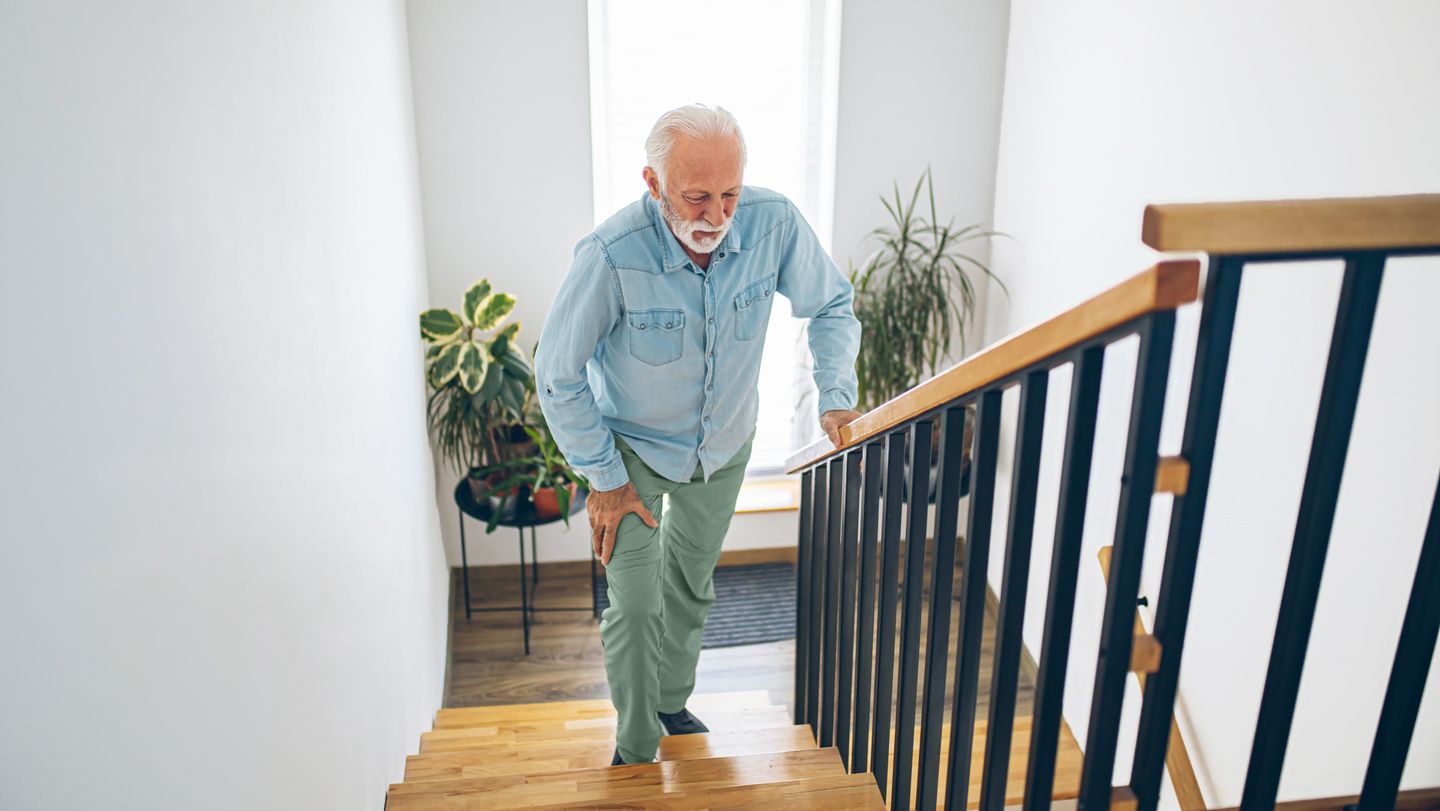
Navigating Stairs Safely Navigating Stairs Safely Climbing stairs can be particularly difficult because it requires repeated activation of already weakened muscles in the hips and thighs. Before you begin climbing or descending stairs, gentle standing marches or small squats while holding onto a handrail can help prepare the muscles, says Jira. Gingras recommends a slow and deliberate approach, taking one step at a time and placing both feet on each step before going to the next. She also advises these tactics: Leading with the stronger leg when going up Leading with the weaker leg when going down Always using a handrail for support Jaworek has a simple way to remember this strategy: “Up with the good, down with the bad.” Additional support may help in some situations. “Some people may benefit from using a cane in the opposite hand for added stability,” says Gingras. If only one handrail is available, climbing stairs sideways may provide additional support and confidence, she says. And if a person is severely weak, sitting on the steps and scooting up or down, moving one step at a time, can make using the stairs possible. Another option for severely weak individuals is to have a home stair lift installed.
The Takeaway LEMS most often weakens the hips and thighs, making everyday movements like standing up and climbing stairs more difficult. The warm-up effect involves brief movement that can temporarily improve strength and be used before more challenging tasks. Simple technique changes like using momentum to stand or taking stairs one step at a time can improve safety and confidence. Assistive devices and home modifications can help reduce falls, conserve energy, and maintain independence.
Trending
- Some dentists say more young people are grinding their teeth – are you one of them?
- Common Culprits and Tips for Relief
- Fire at nursing home in Chile kills 16 residents
- What Is Melanoma?
- Flushing Can Send Toilet Germs to Your ‘Breathing Zone,’ Study Finds
- 9 Easy Breakfast Ideas for Type 2 Diabetes
- ‘Game-changing’ Andy’s Man Club charity expanding in Devon
- Running costs of Covid vaccine damage scheme double the amount paid to victims
Previous ArticleDenseNet Paper Walkthrough: All Connected

Related Posts
Add A Comment
Subscribe to Updates
Get the latest creative news from FooBar about art, design and business.
© 2026 insureai360. Designed by Pro.