

The biggest car news and reviews, no BS
Our free daily newsletter sends the stories that really matter directly to you, every weekday.
Don’t look now, but Stellantis is already staging a comeback. After a couple straight years of doom and gloom, the company just reported a solid uptick in Q1, with more than 305,000 cars sold in the first three months of 2026. That’s a mere 4% increase from Q1 2025 and the company still has a long way to go to get its momentum back, but that’s certainly better than the alternative. This is the same manufacturer that moved more than 330,000 units in the same period in 2024; if you jump back a couple years to 2022, that number was 405,000.
But let’s not focus on the negative. Let’s focus on the weird and interesting. Stellantis is frequently a source of good “zombie car” stories—where a car long-since killed off car is finally unearthed from the depths of a dealer warehouse—and sure enough, there are some last-gen Dodge Challengers and Jeep Renegades on the Q1 sales sheet. But what really jumped out at us this time wasn’t so much the undead, but the nearly-dead-brought-back-to-life: the Dodge Durango.
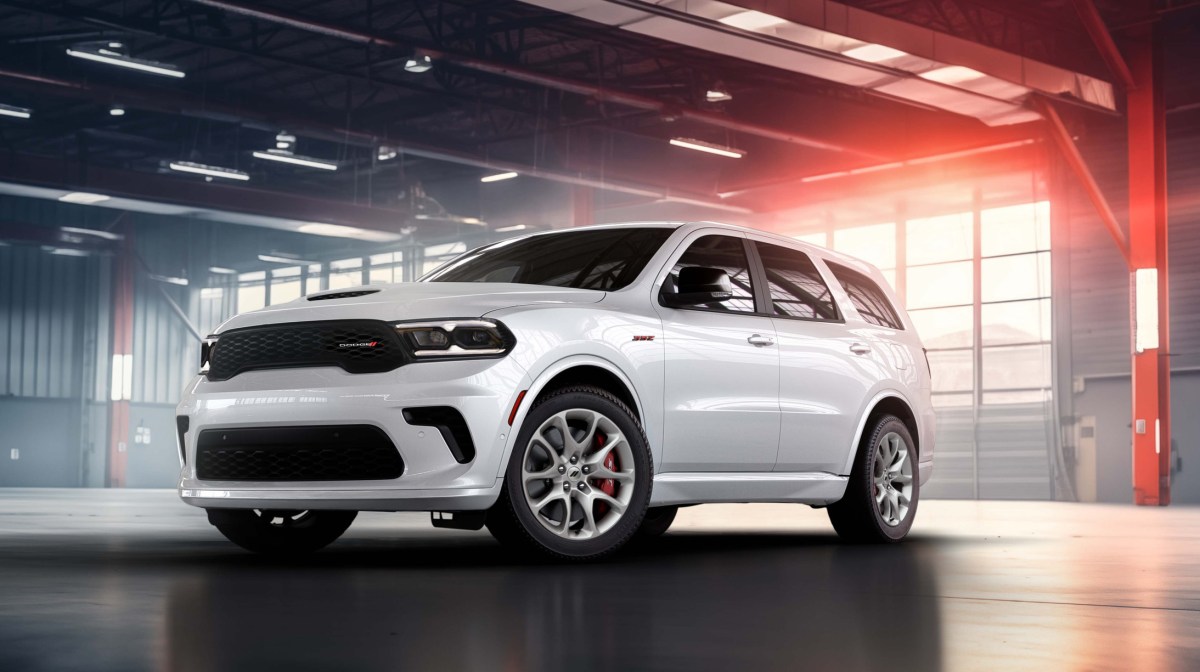
Seriously, Dodge threatened to kill this potentially invincible SUV what felt like a half a dozen times (it was probably far fewer, but still) and yet, here we are in 2026, and not only can you still buy the now-15-year-old SUV new, but Dodge is actively expanding the three-row’s lineup. The 6.4-liter engine is back, the Hemi has been made (almost) standard and the Hellcat is roaring again. And since the Durango is long-since paid off and assembled right here in America (in Michigan, no less, making it essentially tariff-proof), Dodge can afford to offer it at a tantalizingly low price. And it’s working. Check out the chart below.
If you look strictly at the percentages, the Durango’s Q1 performance isn’t all that impressive. The Charger had a bigger upswing in Q1 on a volume basis (up 59%) but with just under 1,700 sold, it’s not a real numbers story. Durango’s 48% bump was a swing of 6,600 units. But forget the ups and downs for a moment and take a look at Dodge’s total volume for Q1: 22,693 vehicles. On paper, that means that nine out of every 10 Dodge customers walked out with a Durango this past quarter.
The showroom breakdown likely isn’t quite that extreme, as we expect a large chunk of those Durango sales went to fleets, for whom Dodge initially kept the Pentastar V6 around. They’ve since backtracked on that, making the cheaper V6 available to the masses. And the masses appear to be interested. Durango hasn’t had a Q1 this strong since 2021, when Dodge sold 20,560 of them. The Charger and Challenger combined for more than 34,000 units in those same three months.
Don’t get us wrong; the Durango certainly has its strengths. Like the Grand Cherokee, it’s an excellent tow vehicle, especially when equipped with a big engine (because that usually comes with bigger brakes). But Dodge desperately needs a proper high-volume SUV; that aging midsize can’t carry the brand on its (admittedly beefy) shoulders forever.
Got a news tip? Let us know at tips@thedrive.com!
Byron is an editor at The Drive with a keen eye for infrastructure, sales and regulatory stories.
