

Nana_studio/Shutterstock
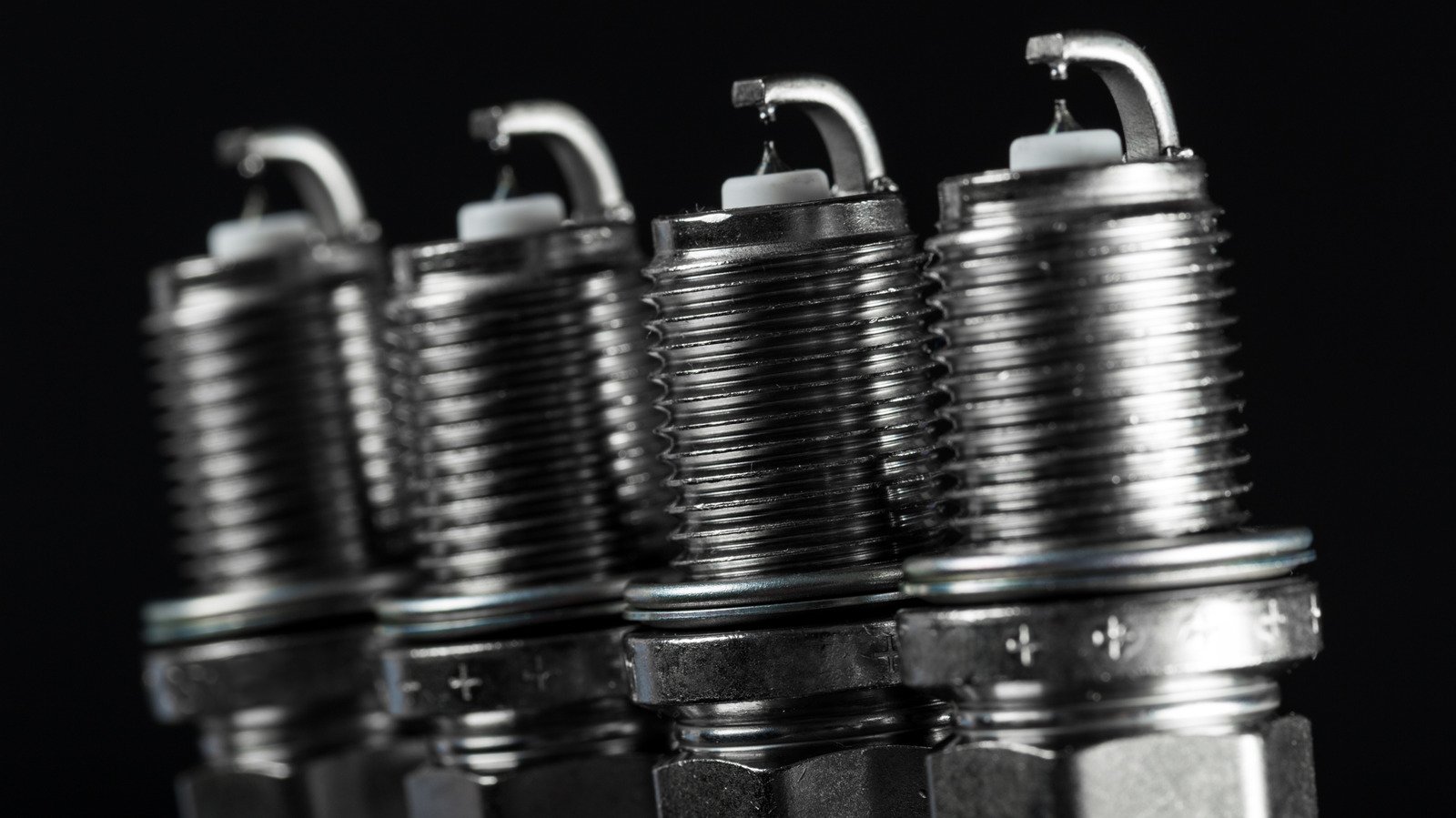
They may look the same, but a closer inspection will reveal that spark plugs come in a variety of shapes and sizes. What works for the V8 in your Ford F-150 may lead to misfiring and idling problems in a four-cylinder Honda Civic, and it’s all because the engine in your car was specifically designed to run as efficiently as possible on factory-spec spark plugs, one with a specific size, type, and heat range.
We already discussed the many spark plug types and why engines require either hot or cold spark plugs, including why plugs have different tip shapes. However, none of those will matter if the plugs are the wrong size to begin with, since the size of the plug will ultimately affect engine performance. But in this regard, bigger is not necessarily better, since using the incorrect size, whether the plug is too long or too short, will introduce a host of annoying issues.
Whether you’re working with a stock or modified engine, the size of the spark plug should be compatible with the cylinder head, and this means determining the thread diameter, the thread length (also called the reach length), the hex size, and the seat type.
How to measure a spark plug
tsyklon/Shutterstock
The thread diameter of a spark plug refers to the width of the threaded part that goes inside the cylinder head. It is typically expressed in millimeters or inches. Most spark plugs have thread diameters of 10 mm (0.394 inches), 12 mm (0.472 inches), 14 mm (0.551 inches), and 18 mm (0.709 inches). You can measure the thread diameter with a caliper for greater accuracy.
Meanwhile, the thread length or reach length measures how long the threaded portion reaches inside the cylinder head. It also defines the length of the thread from the seat to the ground electrode. Like the thread diameter, the reach length is in millimeters or inches, and you can measure it using a ruler or a caliper. Plugs with short tread lengths measure around 6 mm or ¼ inch, while medium reach lengths are usually 12 mm or ½ inch. Long tread lengths would typically measure 18 mm or ¾ inch.
Moving over to the hex size, it refers to the socket size required to install or remove the spark plug from the cylinder head. Most spark plugs have hex sizes of 16 mm to 22 mm. Finally, spark plug seat types include a gasket seat and a tapered seat. The former has a crushable gasket that seals the plug from the cylinder head upon installation. On the other hand, tapered seats have no gaskets and rely on the shape of the spark plug shell to form a tight seal.
The consequences of using the wrong spark plug size
Young Swee Ming/Shutterstock
Based on the critical measurements and parts that make up a spark plug, your engine will suffer dire consequences if the plugs are overly girthy or happen to be too long or too short. If the thread diameter is too wide, it won’t fit in the spark plug hole, and cylinder head damage may result from force-fitting the plug. If the plug is loose, it could overheat inside the motor or disperse heat too quickly, which can lead to knocking, misfires, and incomplete combustion.
Meanwhile, engine damage can occur if the plug reaches too far or too deep inside the cylinder head. The firing end of the plug could make unnecessary contact with the pistons and valves, and that can cause serious damage. Then again, things aren’t so pretty if the reach is too short, since the firing end is not in an optimal position to ignite the air/fuel mixture entirely.
Moving over to the seat type, it’s easy to see how things can go wrong if you use the wrong kind. An incorrect seat means the plugs are not sealing the combustion chamber, and that leads to compression loss and a host of annoying symptoms like shaking, vibrations, poor acceleration, noticeable power loss, and unstable idling.
It makes sense to refer to the owner’s manual to know the correct size and spark plug type for your car’s engine. Not only will it affect the heat range, but using the wrong spark plugs can lead to premature engine damage if neglected.
