

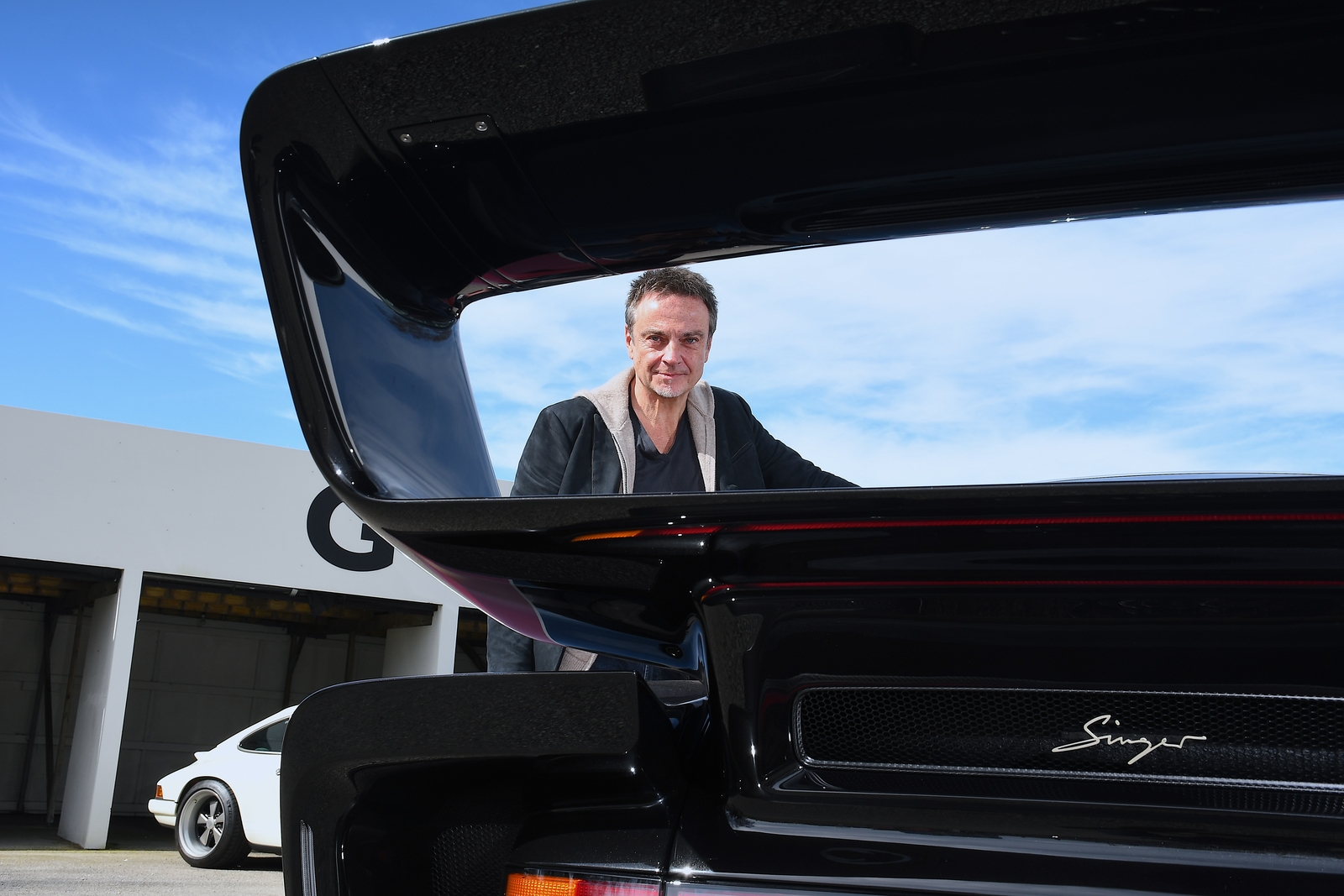
According to the founder of Singer, Rob Dickinson, the genesis of the world’s most famous bespoke Porsche builder was far more rock-and-roll than boardroom.
Speaking candidly on the Autocar podcast, Dickinson laid bare the chaotic early days of Singer Vehicle Design, revealing that the company’s massive global success was born out of sheer drive rather than impeccable planning.
“The only f***ing business plan we had was that I convinced my father-in-law that I’ve got an idea for a perfect Porsche 911 and he gave me some of his money,” Dickinson laughed, reflecting on Singer’s origins.
It’s a startling admission from the man who now oversees a powerhouse with around 800 employees and a years-long waiting list. But in the late 2000s, after leaving behind a music career in the UK and moving to Los Angeles, Dickinson’s ambitions were much narrower.
He had built his own perfect 911: a lightweight, stripped-back 1969 “café racer” pieced together with a Frankenstein mix of parts, which garnered intense attention from record executives and car nuts on the streets of Hollywood.
People constantly asked to buy it, but Dickinson didn’t want to become a manufacturer. In fact, his company’s name was meant to be taken entirely literally. “Singer Vehicle Design was called Singer Vehicle Design because we were meant to be a bloody design company,” Dickinson explained. “Not building cars. Building cars was not part of the plan whatsoever.”
The original concept was to simply design the ultimate air-cooled 911 and hand the oily, complicated manufacturing over to someone else. But Dickinson’s uncompromising vision quickly derailed that hands-off approach. His dream required a level of detail, curation and finish that simply didn’t exist in the traditional hot-rod or restoration world at the time.
To meet his own relentless standards, Dickinson had to pivot and bring the work in-house, plunging into a grueling, expensive learning curve. “We had to make up a big part of the business we didn’t imagine, which is building cars to this ridiculously high standard,” he noted. The obsession with getting it right led to staggering labour times that would make any traditional automotive accountant weep.
Dickinson admitted to demanding “1600 hours” of labour just for the bodywork on early cars. Dickinson says that the philosophy behind Singer’s restorations is to “dig down to find the real kernel of what makes something special”, and that’s exactly what he does, attracting top-tier talent from the Formula 1 community, Aston Martin and McLaren.
Other topics discussed on the podcast include Singer headlining the 2026 Goodwood Festival of Speed and if Singer would ever consider restoring a car that isn’t a Porsche.
