

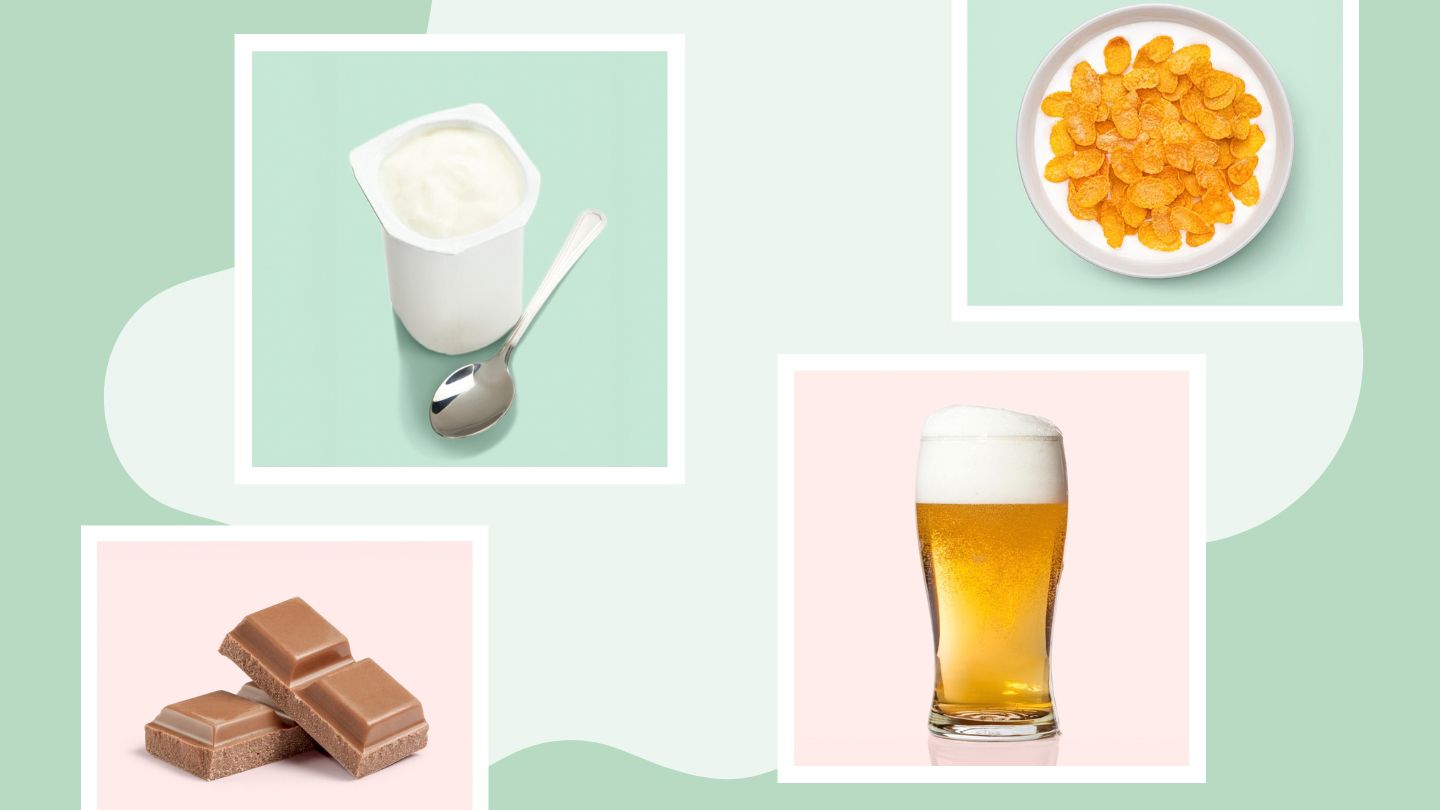
Who doesn’t love putting up their feet and tucking into a bowl of popcorn or ice cream at the end of a long day? While the occasional bedtime snack is fine, capping off every day with sweet or salty fare may spell trouble.
“Snacking later into the night increases the chance of weight gain, obesity, and cardiometabolic diseases,” says Kristin Kirkpatrick, RD, a dietitian and author of Skinny Liver: A Proven Program to Prevent and Reverse the New Silent Epidemic — Fatty Liver Disease.
Many of us are more likely to reach for less-than-healthy foods in the evening, and you can blame your body’s built-in survival mechanisms for this. Research has shown that our circadian rhythms (the body’s internal processes that follow a 24-hour cycle) raise our hunger and cravings for sweet, salty, and carbohydrate-heavy foods when we’re tired — which tends to be at nighttime after a long day, for most of us.
[1]
The downside of late-night cravings is that they can add unnecessary calories that lead to significant weight gain if left unchecked. Research explains that late-night eating could throw off our internal clocks and may be associated with higher total caloric intake and body mass index (BMI).
[2]
“To offset these innate cravings, I have found that your first defense should be drinking a glass of water or [caffeine-free] tea, rather than heading to the snack pantry,” Kirkpatrick says.
Ideally, you’ll stop eating two to three hours before going to bed. If you’re actually hungry and you need a snack to dip into slumber, chances are you’re not eating enough during the day, Kirkpatrick explains. Still, if you do need to eat, or you crave a quick bite before bed, “it is important to choose a small, low-calorie, nutrient-dense snack at this time of the day,” Kirkpatrick says.
In fact, some snacks contain nutrients that may relax your body, helping you fall and stay asleep. Read on to discover the best bedtime snacks, as well as the snacks to avoid before getting some sleep.
